

Key Takeaways
A little checking before checkout can prevent the wrong part, unexpected costs, and avoidable delays. Start with your vehicle details, then keep the listing and seller’s terms handy through installation.
- Confirm your model year, trim, engine, and VIN before comparing listings.
- Compare OEM, aftermarket, used, and remanufactured options against the repair and your budget.
- Review fitment details, seller policies, payment security, and the full price.
- Get unclear compatibility questions answered before placing your order.
- Inspect the delivered part and keep your order records until the repair is complete.
Identify the right part for your Mitsubishi
Finding the right replacement starts with details about the vehicle, not just a general search for a part name. Similar models can use different components depending on year, trim, engine, or production changes. Gather what you can before browsing, and treat fitment as something to verify rather than assume.
Find your vehicle’s model year, trim, and engine
Start with the model year, trim level, and engine information, which can usually be found in the owner’s manual or vehicle paperwork. If you are unsure of the trim or engine, check the vehicle identification label or ask a repair professional to help identify it. These details make it easier to narrow search results, but they do not always settle fitment by themselves. Keep them together so you can compare each listing consistently.
Locate the VIN and understand how it helps confirm fitment
The vehicle identification number, or VIN, is a unique identifier that can help a seller or parts professional check compatibility. You can typically find it on the dashboard near the windshield or on vehicle documents. Share it only when needed with a seller you trust, and ask whether they use it to verify the specific part you need. A VIN lookup can help, but it is still sensible to confirm the listing details before ordering.
Use the part number when replacing an existing component
If the old component is accessible, look for a part number printed or stamped on it, then compare that number with the replacement listing. Numbers may be difficult to read, and a previous owner may have installed a different component, so use the number as useful evidence rather than the only check. Ask the seller whether the listed number is an exact match or a compatible replacement. That distinction can matter when the repair depends on a precise connection or specification.
Check whether related parts or hardware are also needed
A replacement component may require seals, clips, fasteners, or other related items that are not included in the main listing. Before ordering, check the product description and ask whether the package includes the pieces your repair requires. It can also help to consult a repair manual or mechanic, especially if the surrounding components need inspection during the job. A few minutes spent checking the full repair can save a second order.
Choose between OEM and aftermarket parts
A replacement part is not simply a choice between the lowest and highest price. The right option depends on the component, the vehicle’s requirements, your budget, and how long you plan to keep the car. Compare the listing’s condition and specifications before deciding.
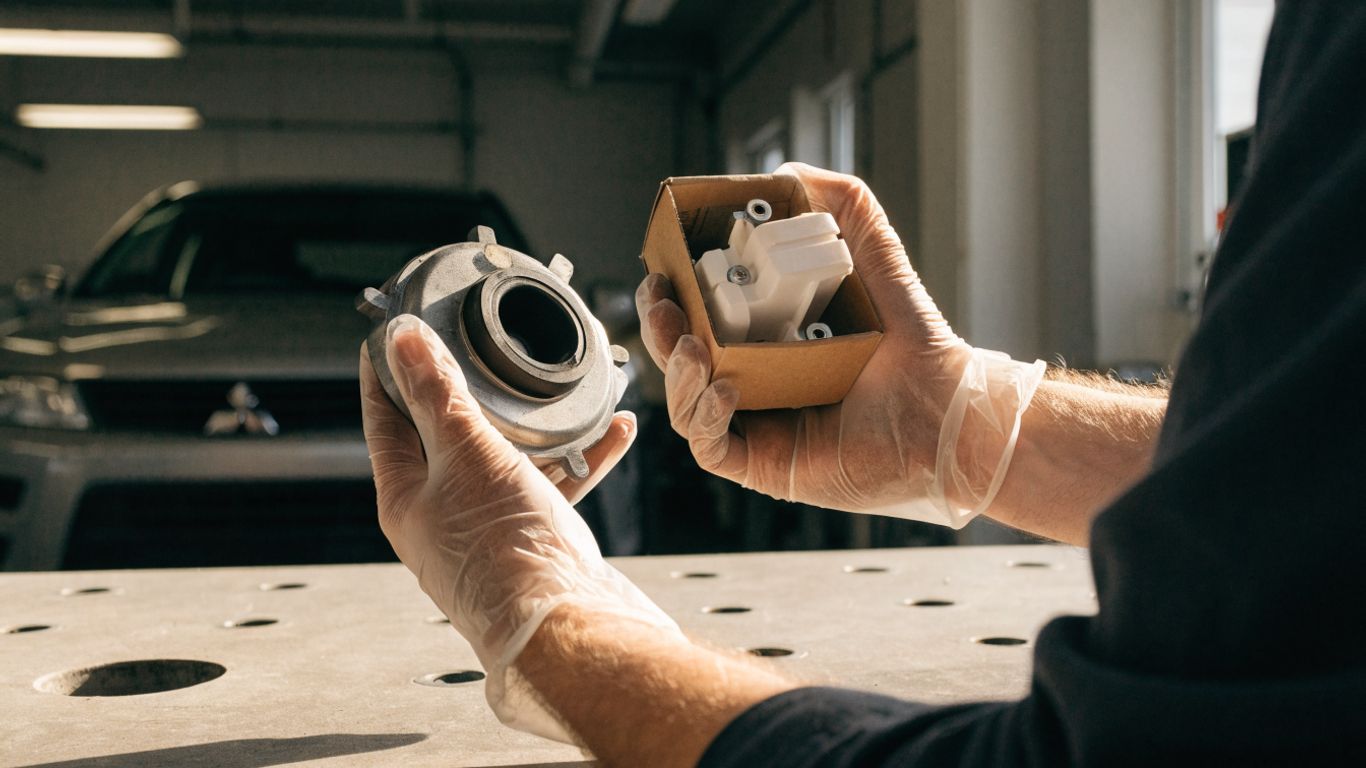
Compare original Mitsubishi parts with aftermarket alternatives
An original Mitsubishi part and an aftermarket alternative may differ in maker, price, availability, and the information provided with the listing. Compare the stated part number, fitment details, condition, and any included hardware rather than relying on a label alone. The following quick comparison can help frame the questions to ask, though the answers depend on the individual part and seller.
| Option | What to check | Useful question |
|---|---|---|
| Original part | Part number and stated condition | Does the number match my vehicle’s requirement? |
| Aftermarket part | Fitment claim and specifications | Which vehicle details were used to confirm fit? |
| Used part | Wear, source, and return terms | What condition is documented, and can it be returned? |
| Remanufactured part | Work performed and warranty terms | What has been renewed, and what is covered? |
Use the comparison as a starting point, not a guarantee of quality or compatibility. A clear answer about the part’s identity and condition is more helpful than a broad claim that it fits many vehicles.
Weigh price, warranty, and expected service life
Compare the total cost, including shipping and any necessary related items, instead of judging by the listing price alone. Review the warranty in writing and consider how the expected use of the vehicle affects your choice. A lower-cost part may make sense for one repair, while another may justify paying more for a clearly documented condition or warranty. The seller’s stated coverage is not the same as a promise about how long a part will last.
Check whether a used or remanufactured part suits the repair
Used and remanufactured parts can be options when their condition and repair history are clear enough for the job. Ask what is known about the used part, or what work was carried out on a remanufactured one, and check the return and warranty terms. For components that affect safety or require substantial labor to replace, discuss the choice with a qualified mechanic. The best value is not always the part with the lowest upfront cost.
Confirm that the part meets your vehicle’s specifications
Before choosing a part, compare its stated specifications with the requirements for your particular vehicle and repair. Check details such as the part number, dimensions, connections, and any listed model-year limitations where relevant. If a listing leaves out information that matters to your repair, request clarification instead of filling in the gaps yourself. Keep a record of the specifications you checked in case you need to ask about a return later.
Evaluate online parts sellers
A useful listing should make it possible to understand what is being sold and how the seller handles the order. Look beyond polished product photos to the fitment information, condition notes, and policies. When those details are easy to find, it is easier to compare sellers on more than price.
Look for clear fitment information and product details
Check whether the listing identifies the part, its condition, and the vehicle details it is claimed to fit. Useful descriptions distinguish what is included from what may need to be purchased separately. Look for clear photos of the actual part when condition is relevant, rather than assuming a generic image shows exactly what will arrive. If the details are incomplete, pause and ask before placing an order.
Review seller policies, customer feedback, and contact options
Read the return and warranty policies before buying, including any exclusions that could affect your repair. Customer feedback can give context on communication and order handling, but individual reviews are not a guarantee of your experience. Check that the seller offers a practical way to ask questions and can explain how fitment is confirmed. A direct response to a specific question is often more useful than a general assurance.
Check for secure payment and transparent pricing
Before entering payment details, make sure the checkout process uses a secure connection and clearly identifies the amount due. Look for shipping charges, taxes, handling fees, and any other costs before submitting the order. Payment options and protections vary, so review the terms shown at checkout rather than assuming they are the same across sellers. Keep a copy of the final price and order summary.
Watch for vague listings and unusually low prices
A price far below comparable listings deserves a closer look, especially when the description is thin or the part’s condition is unclear. Check whether the listing refers to a complete component, a single piece, or a part that needs repair. General buying advice is simple: if key details are missing, seek clarification before paying. A clear explanation can help distinguish a genuine bargain from a listing that does not match the repair.
A careful question before checkout is easier to resolve than a fitment problem after delivery.
Apply that principle whenever a listing leaves the part number, condition, or compatibility uncertain. If the seller cannot answer a basic question clearly, consider waiting until you have enough information to make a confident choice.
Place your order and verify fitment
Once you have found a promising listing, take a final pass through the vehicle details and the seller’s terms. Search results can make similar parts look interchangeable, so make sure the specific item in your cart is the one you checked. Keep a record of what you relied on when ordering.

Match the listing to your vehicle details before checkout
Compare the listing against your model year, trim, engine, and any part number or VIN-based confirmation you obtained. Check for exceptions or notes about production dates and vehicle configurations. If the seller’s fitment guide does not cover your exact details, do not infer that a nearby model is automatically compatible. Confirm the item in the cart still matches the listing you reviewed.
Ask the seller to confirm compatibility when information is unclear
Send the seller the relevant vehicle information and the listing or part number, then ask for a clear fitment confirmation. Be specific about what is uncertain, such as whether the item fits a particular engine or whether a listed number is a direct match. Save the response with your order records. If the answer remains ambiguous, hold off until you can confirm the requirement another way.
Review the cart for quantities, accessories, and added fees
Before paying, check that the cart contains the right quantity and that any necessary accessories or hardware are included or separately listed. Look again at shipping, taxes, and other charges, and confirm the delivery address. A cart review catches small errors that can become inconvenient once the order is underway. If something does not match your notes, revise it before checkout.
Save your order confirmation and part details
Keep the order confirmation, listing description, part number, seller messages, and payment record together. These details can help if you need to check a delivery, ask about a warranty, or request a return. Save a copy of the page or product details in case the listing changes after purchase. Having the information in one place makes the next steps easier.
Understand shipping, returns, and warranties
The part’s purchase price is only one part of the order. Delivery timing, return eligibility, and warranty terms can affect whether a listing suits your repair schedule and budget. Review these details before checkout, while you still have time to compare options.
Compare delivery times, costs, and tracking options
Check the estimated delivery window, shipping cost, and whether tracking is provided. If the repair is time-sensitive, consider whether the stated delivery estimate leaves room for delays. Large or heavy components may have different shipping arrangements, so confirm the terms for the specific item. Keep the tracking information until the package arrives.
Check the return window and eligibility for opened or installed parts
Read the return period and the conditions that apply to the part you are buying. Some sellers treat opened, tested, or installed items differently, so do not assume a part can be returned once you have tried it. Check whether the part must be unused, complete, or returned in its original packaging. If fitment is uncertain, get it resolved before installation.
Review warranty coverage and claim requirements
Look for the duration of any warranty, what it covers, and how a claim must be made. The terms may specify proof of purchase, installation requirements, or other documentation. Ask questions if the policy does not explain what happens when a part is faulty or does not match its description. Save the written terms alongside your receipt.
Plan for delays, backorders, or damaged shipments
A delivery estimate can change if an item is delayed or temporarily unavailable, so consider how much time your repair can tolerate. When the package arrives, inspect it promptly and photograph any visible damage before discarding the packaging. Contact the seller using the process in its shipping policy if the item is damaged or incomplete. Keeping the box and labels can help while the issue is being resolved.
Prepare for installation
A correct part still needs to be installed safely and properly. Before the package arrives, consider the tools, instructions, and time the repair will require. Then check the delivered component before removing the old one or beginning work.
Check whether the repair requires specialist tools or skills
Look up the repair procedure and identify any specialist tools, calibration steps, or safety precautions it calls for. If the job involves systems you are not comfortable working on, get advice from a qualified mechanic before starting. A repair manual can help clarify the process, but it does not replace experience with a difficult or safety-critical repair. Knowing the limits in advance can prevent a half-finished job.
Compare DIY installation with professional service
DIY work may suit a repair you understand and can complete with the tools and workspace available to you. Professional installation may be the more practical choice when diagnosis is uncertain, the procedure is complex, or an error could affect safety. Compare the total cost of the repair, including labor and any required follow-up checks. Choose the approach that fits both the job and your confidence.
Inspect the delivered part before fitting it
Compare the part you received with the order confirmation and the original component, checking its number, visible condition, and included pieces. Do not install an item that appears damaged, incomplete, or different from what you ordered. Contact the seller promptly and follow the stated process for resolving the issue. An early check is easier than discovering a mismatch after the repair is underway.
Keep receipts and packaging until the repair is complete
Hold on to the receipt, box, labels, and any paperwork until the part is installed and working as expected. These records may be needed for a return or warranty claim, and packaging can help protect the item if it must be sent back. Once the repair is complete and any relevant return period has passed, you can decide what to keep. Until then, store everything somewhere accessible.
Conclusion
Buying a replacement part online becomes more manageable when you verify the vehicle details, compare the part and seller carefully, and understand the terms before paying. Keep your order records, inspect the delivery, and ask for help when fitment or installation is uncertain. Those steady checks can make the process clearer from search to repair.