

Key Takeaways
A little preparation can make finding and ordering the right part much easier. Verify fitment and the final price before you commit.
- Start with your vehicle’s year, trim, engine, and VIN.
- Ask a parts department to confirm the part number fits your vehicle.
- Compare the complete cost, including delivery and special-order fees.
- Check stock, return terms, and packaging before taking the part home.
- Weigh the repair’s tools, skill, and possible calibration needs before choosing DIY.
What Mitsubishi genuine parts are and why they matter
When replacing a component, you can encounter genuine, aftermarket, and used parts. The labels describe different sources and conditions, but they do not by themselves answer whether a specific part suits your vehicle. Consider how it will be used, how its fit will be confirmed, and what return or warranty terms apply. A little verification up front can save time if the part needs to be exchanged.
How genuine parts differ from aftermarket and used parts
Genuine parts are sold as parts intended for the vehicle make, while aftermarket parts are produced by other manufacturers and used parts have previously been installed or owned. Quality, condition, and fit can vary within each category, so the label alone is not a substitute for checking the details. Ask who supplied the part, whether it is new, and how the seller confirms the application. That gives you a clearer basis for comparing options than price alone.
How OEM parts support fit, function, and compatibility
An original-equipment part is generally selected to match the vehicle application it was made for, but the correct fit still depends on the exact vehicle and part number. Model year, trim, engine, and production changes can affect which component is appropriate. Before ordering, ask the parts department to verify compatibility using your vehicle information. Confirm the part number rather than relying only on a photo or a broad model description.
When genuine parts may be especially important
A genuine component may be worth considering when the replacement has to match a particular mounting point, connector, or vehicle system. The more closely a part interacts with other components, the more useful it is to have fitment checked against the vehicle details. For simpler repairs, you may also want to compare other options, provided you can establish their condition and compatibility. The right choice is the one that suits the repair and can be verified.
What to know about warranties and installation
Warranty terms vary by seller and by the part involved, so ask for the written conditions before buying. Check whether the warranty covers the part itself, what proof of purchase is required, and whether installation conditions apply. If a repair is being done professionally, ask the shop and parts seller how their separate policies work together. Keep the answer with your receipt so you can refer back to it if a question comes up.
Where to find Mitsubishi genuine parts nearby
Searching for Mitsubishi genuine parts near me is a useful start, but nearby results may differ in stock, pickup options, and the way fitment is checked. Contact parts departments directly with your vehicle details and a description of the component. Ask whether they can confirm the application and provide a written quote. If a local counter cannot help, a special order may still be possible.

Search Mitsubishi dealer parts departments
A dealer parts department is a sensible place to begin when you want a part listed for your vehicle make. Use the department’s phone number or contact form to ask about the component rather than assuming that an online listing reflects current stock. Have the year, model, trim, and engine ready, and describe the repair if you know it. A direct conversation can clarify whether the department needs a VIN or an existing part number to check fitment.
Check authorized service centers and local inventory
A service center may be able to tell you whether it can supply the part as part of a repair, or whether you should contact its parts counter separately. Ask what is physically on hand, what must be ordered, and whether pickup is available to customers who are not booking installation. Inventory can change, so confirm the item is being held for you before making the trip. That small call can prevent a wasted journey.
Use Mitsubishi’s official resources to locate retailers
If the manufacturer provides a retailer locator or official contact page in your region, use it to identify nearby places to ask about parts. Check that the page applies to your country, since retailer listings and purchasing options can differ by market. An online listing can point you in the right direction, but it does not confirm the part is in stock or correct for your vehicle. Follow up with the retailer to verify both before travelling.
Consider ordering from a nearby dealer if a part is not in stock
A local department may be able to order an item that is not on its shelf. Before placing the order, ask for the estimated arrival window, any deposit requirement, and what happens if the part proves to be incorrect. For a clearer picture of the choice, separate the questions into availability, timing, and terms rather than focusing only on whether the item can be sourced. You can then decide whether waiting or checking another location makes more sense.
How to confirm a part fits your Mitsubishi
Correct fitment is easier to establish when you bring specific vehicle information to the parts counter. A model name alone may not distinguish every version or production change. Share as many details as you can, then ask the parts staff to confirm the part number against them. If the vehicle has been modified or a component was replaced before, mention that too.
Gather your model year, trim, and engine details
Write down the model year, trim level, and engine details before calling or visiting. These are useful starting points, but they may not be enough on their own to identify every part application. If you have the owner’s documents or a previous repair invoice, check them for details that can help narrow the search. Giving consistent information to each parts department also makes quotes easier to compare.
Find the VIN on your vehicle and registration
The vehicle identification number, or VIN, provides a specific identifier for your vehicle. You can usually find it on a plate or label on the vehicle and in its registration paperwork; check both sources and make sure the characters match. When sharing the VIN, use the parts department’s preferred method and avoid posting it publicly. Having it available can help staff check the application more precisely.
Ask the parts department to verify the part number
Once you have a proposed part number, ask the staff member to verify it against your VIN and the repair you are making. A number found in an online listing or on an old component can be a useful clue, but it may not settle the question by itself. Keep a note of the number, description, and any caveats the department gives you. That record helps if you need to call back or compare another quote.
Check compatibility when your vehicle has midyear updates
Vehicles can have production changes that are not obvious from the model year alone. If the parts department raises a production-date distinction, ask what information it needs to identify the right version. A practical check may involve the VIN, a build date, or details from the existing component, depending on the part. Don’t assume a near match is interchangeable; have the application confirmed before ordering.
How to compare prices and availability
A low listed price does not always mean the lowest final cost. Quotes may differ because one part is in stock while another has to be ordered, or because delivery and return terms are not included in the headline price. Ask each parts department to quote the same part number and clarify what the price covers. A like-for-like comparison makes the decision much less murky.
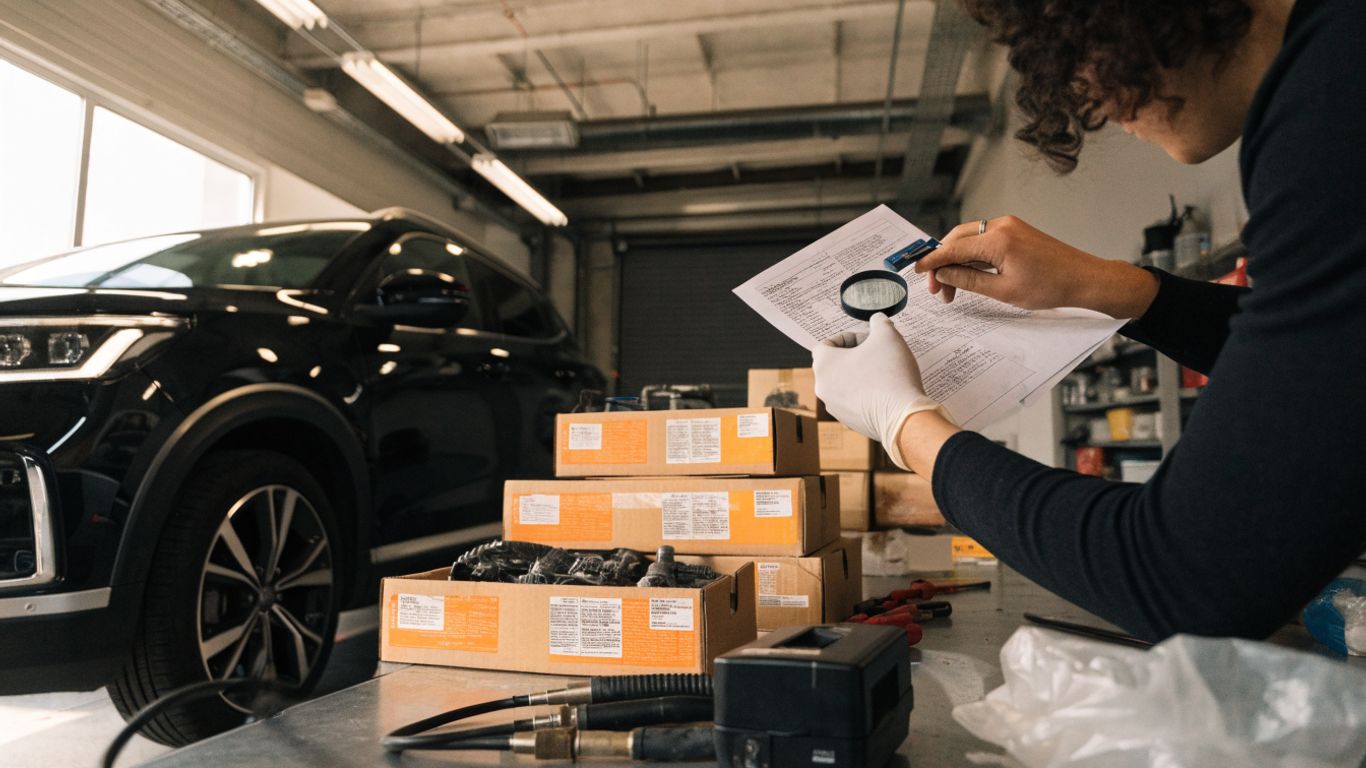
Request quotes from more than one local parts department
If more than one nearby parts department can supply the item, request a quote using the same verified part number. Ask whether the amount includes tax and whether the quoted price is valid for a particular period. The comparison below is a simple way to keep the details together while you make calls.
| Quote detail | What to ask | Why it helps |
|---|---|---|
| Part number | Is this the verified number for my vehicle? | Keeps quotes focused on the same item. |
| Price | What is the price before and after applicable charges? | Clarifies the amount you will pay. |
| Availability | Is it on hand or ordered in? | Sets expectations for timing. |
| Collection | Where and when can I pick it up? | Helps plan the trip. |
After you have the answers, compare the complete offer rather than just the first number you heard. If a quote leaves out a charge or timing detail, call back before deciding. That small extra step can make an apparent bargain easier to assess.
Compare shipping, pickup, and special-order fees
Ask whether the part can be collected locally, delivered, or must be shipped from another location. For special orders, check whether freight or handling charges are separate from the part price and whether an estimated arrival date is available. A useful comparison is the total cost to get the correct part into your hands, not simply the price on a listing. Confirm pickup arrangements before setting out.
Ask about return policies and restocking charges
Before paying, ask whether the seller accepts returns if the part is unopened, incorrect, or no longer needed. Check the time limit, required packaging, and whether a special-order item has different conditions or a restocking charge. Written terms are easier to rely on than a general assurance. If the fitment is uncertain, settle that question before ordering rather than counting on a return as a backup.
Confirm the part is genuine before paying
If you are paying for a genuine part, ask how the seller identifies it and whether the invoice will describe it accordingly. Check that the part number on the quote matches the number being ordered, and ask for clarification if the description is vague. Packaging and labels can be useful checks at pickup, but they should support—not replace—the seller’s confirmation. Keep the quote or order details with your receipt.
How to order and pick up the right part
Once fitment and pricing are clear, a careful order helps avoid mix-ups at collection. Repeat the part number and vehicle details when placing the order, even if you have already discussed them. Confirm where the item will be collected and what you need to bring. When it arrives, take a moment to check the label and condition before leaving.
Share the part number and vehicle details when placing an order
Give the parts department the verified part number along with the vehicle’s year, model, trim, engine, and VIN if requested. Ask the staff member to repeat the number and description so you can catch a mismatch early. If you are ordering more than one item, clarify which part number goes with each component. A clear order record is particularly helpful if you need to follow up later.
Check whether the part is in stock or needs to be ordered
Ask whether the item is available now, being transferred, or needs to be ordered from elsewhere. Get an estimated timeframe and find out whether the department will contact you when it is ready. If the timing matters to your repair, ask what happens if the expected arrival changes. Knowing the status helps you plan installation without making assumptions about delivery.
Inspect the packaging and part label at pickup
At collection, compare the part label and order paperwork with the number you were given. Check the packaging for obvious damage and make sure the item appears to match the description before taking it away. If anything is unclear, ask the counter staff to resolve it while the order is still easy to trace. Keep any packaging until you have confirmed the part is right for the job.
Keep your receipt and warranty documentation
Save the receipt, order confirmation, and any written warranty terms together. These documents can establish what you bought, when you bought it, and which return or warranty conditions applied. If someone else will install the part, pass along the part information and keep a copy for your records. Good paperwork makes a later question much simpler to answer.
How to choose between DIY installation and professional service
The right installation choice depends on the repair, your experience, and the equipment available to you. Some jobs may be straightforward for a capable home mechanic, while others call for specialized tools or a diagnostic check. Consider the full task before buying, including what happens after the part is fitted. If you are unsure about the consequences of a mistake, ask a qualified repair professional for an estimate.
Assess the tools and experience the repair requires
Look into the steps involved before deciding to do the work yourself. Consider whether the repair requires lifting the vehicle, handling electrical connections, or using tools you do not own. Compare the time and cost of getting the right equipment with the price of professional installation. If the procedure feels beyond your experience, getting advice before starting can prevent a small repair from becoming a larger one.
Identify repairs that may need diagnostics or calibration
Some repairs may involve more than physically replacing a component; the vehicle may need a diagnostic check or a system calibration afterward. Ask the parts department or repair professional whether the specific job has additional steps. The right answer depends on the repair and vehicle, so avoid assuming that a part is ready to use simply because it fits. Clarifying the work in advance helps you budget for the whole job.
A part is only one piece of a repair; plan for the steps needed to make the repair complete.
Use that broader view when deciding whether to handle the installation yourself. If diagnostics or calibration are part of the job and you lack the required equipment, professional service may be the more practical route.
Ask whether installation affects warranty coverage
Before work begins, ask the seller or service provider whether installation method affects any applicable warranty terms. Request the relevant conditions in writing, especially if the part is being installed by someone other than the seller. Do not assume that a warranty automatically requires dealer installation—or that it never does. The written terms are the best guide for the specific part and purchase.
Compare the total cost of parts and labor
Compare the cost of doing the repair yourself with a professional quote that includes parts and labor. For DIY, include tools, supplies, possible delivery, and the value of your time; for a shop, ask whether the estimate includes diagnostics or related work. The lowest upfront amount may not be the lowest total if additional steps are needed. Choose the option that fits both your budget and your confidence in completing the repair.
Conclusion
Finding the right part nearby comes down to verifying the vehicle application, comparing complete quotes, and checking the order before you leave with it. Keep the part number and paperwork together, and decide on installation with the full repair in mind. Those simple habits can make the search more straightforward and help you buy with greater confidence.