

Key Takeaways
Finding the right Pajero part is mainly a matter of identification, fitment checking, and sensible comparison.
- Confirm the Pajero model, build year, engine, transmission, and trim before ordering.
- Compare genuine, aftermarket, and used parts by risk, condition, warranty, and total cost.
- Use the VIN and original part number when asking suppliers to confirm compatibility.
- Check specialist advice for complex drivetrain, electrical, safety, and suspension work.
- Inspect delivered parts carefully and arrange safe installation and disposal.
Understanding your Mitsubishi Pajero parts needs
A Pajero part that looks correct may still belong to a different engine, update, drivetrain, or interior specification. Start with the vehicle details rather than the appearance of the component. If you are searching for Mitsubishi Pajero parts Castle Hill, having those details ready will make conversations with local suppliers much quicker.
The most useful information includes the model designation, build year, VIN, engine size, transmission type, and whether the vehicle has four-wheel drive equipment or a particular trim level. Photographs can help, but they should support—not replace—proper part identification.
Identifying your Pajero model and build year
Begin by checking the compliance plate, registration records, service documents, and the vehicle identification number. A model name alone is rarely enough because vehicles sold under the same general name can have different components across production periods. Note the build month as well as the year where possible, especially when ordering body, lighting, or electronic parts.
Write down the exact description of the failed or missing component before contacting a supplier. “Front suspension part” is too broad; a description such as a lower control arm, stabiliser link, or strut mount gives the parts counter a much better starting point.
Comparing genuine, aftermarket, and used parts
Genuine parts are generally the simplest option when exact fit, original specification, or long-term peace of mind matters most. Aftermarket parts can be practical for routine maintenance, provided the manufacturer and application are clear. Used parts may suit older Pajeros or hard-to-source trim items, but their condition and remaining service life need closer inspection.
The cheapest purchase price is not always the cheapest repair. Consider labour, shipping, the chance of an incorrect fit, and whether a failed component could damage nearby parts before choosing between the three categories.
Matching parts by engine, transmission, and trim
Engine and transmission details can change the correct filter, belt, sensor, mount, cooling component, and driveline part. Trim differences can also affect mirrors, seats, switches, interior panels, wheels, and exterior fittings. Record these details in one note so that every supplier receives the same information.
For a used component, ask whether it came from a vehicle with the same engine and transmission combination. This is especially useful for assemblies that may look similar but have different connectors, mounting points, ratios, or calibration requirements.
Knowing when a specialist is the better choice
A specialist is useful when the diagnosis is uncertain, the part is safety-critical, or several variants appear in catalogues. Complex electrical faults, four-wheel-drive systems, automatic transmissions, and major suspension work can become expensive if the first part ordered is wrong. Accurate diagnosis saves money before any purchase is made.
For straightforward items such as filters, bulbs, clips, and some trim pieces, a careful owner may be comfortable handling the research. For brake hydraulics, steering components, airbags, or work requiring special tools, professional advice is the safer route.
Where to find Mitsubishi Pajero parts in Castle Hill
Castle Hill gives Pajero owners several ways to source parts, from a dealership parts counter to used-parts suppliers and online stores. Each route has a different balance of convenience, price, availability, and technical assistance. Calling first can prevent an unnecessary trip, particularly for bulky or less common components.
Bring the vehicle details and, if possible, the old part or clear photographs. A supplier can often narrow the search quickly when the request includes the VIN, part location, and reason for replacement.
Local Mitsubishi dealerships and parts departments
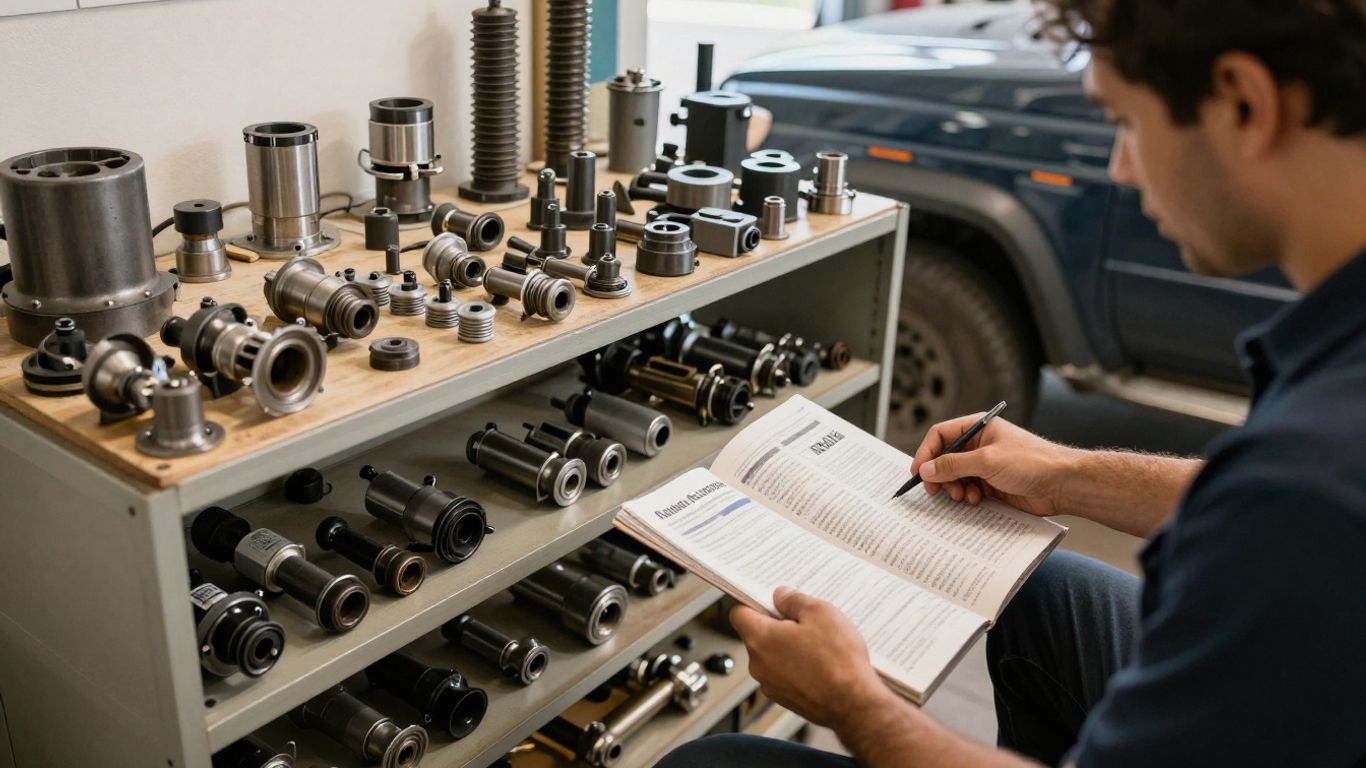
A local dealership parts department is a natural first stop when you want a new part matched to the vehicle record. The Castle Hill Mitsubishi dealer search result describes the ability to purchase Mitsubishi Genuine Parts and Accessories through its catalogue, with ordering available by contacting the business or submitting an online parts request.
Ask whether the item is available locally, needs to be ordered, or can be collected. Confirm the quoted part number and return conditions before paying, particularly if the component is ordered specifically for your vehicle.
Automotive wreckers and used-parts suppliers
Wreckers can be a sensible source for doors, mirrors, seats, interior panels, wheels, brackets, and other components where cosmetic condition matters more than having a new item. Ask for the donor vehicle’s build details and request photographs of the actual part rather than relying only on a catalogue image.
Check for corrosion, cracks, missing fasteners, damaged plugs, water ingress, and signs of previous repair. A used mechanical or safety component deserves more caution than a used trim panel, even when both appear inexpensive.
Independent 4WD and Mitsubishi specialists
Independent specialists may help when the fault involves a modified vehicle, four-wheel-drive hardware, driveline noise, or a part whose application is difficult to identify. Their value is often in diagnosis and experience rather than simply having the lowest price. Explain any suspension lift, wheel change, towing equipment, or electrical modification because it may affect the replacement choice.
A useful specialist conversation should end with a clear description of the required part, the reason it is needed, and any related components that should be inspected. That clarity helps prevent replacing a symptom while leaving the underlying fault untouched.
Online retailers that deliver to Castle Hill
Online ordering is convenient for common service items and parts that are not immediately available nearby. Before placing an order, check the supplier’s delivery estimate, stock status, fitment process, and returns policy. Oversized panels, batteries, exhaust components, and fragile electronics may have different freight conditions.
Use the supplier’s vehicle selector as a starting point, then confirm the result manually with the VIN or original number. A polished product page does not remove the need to verify the application.
Choosing the right replacement parts
The right replacement depends on the component’s job, the vehicle’s condition, and the consequences of failure. A routine filter and a steering component should not be judged by the same standard. Think about reliability, environmental exposure, installation requirements, and how difficult the part would be to replace again.
For older Pajeros, surrounding components may also be worn. Replacing one ageing hose, bush, or connector can reveal another weak point, so a quick inspection around the repair area is worthwhile.
Engine, cooling, and fuel-system components
For engine and cooling work, match the part to the engine code and production details rather than relying on the vehicle name alone. Check hose shapes, thermostat specifications, sensor connectors, belt dimensions, and mounting arrangements. Cooling parts deserve prompt attention because overheating can turn a modest repair into major engine damage.
Fuel-system work calls for extra cleanliness and care. Keep open lines capped, replace damaged seals, and avoid improvising with a component that has not been confirmed for the application. If the issue involves fuel pressure, injectors, or electronic control, diagnosis should come before substitution.
Suspension, steering, and braking parts
Suspension and steering parts affect handling, tyre wear, and safety, so matching the axle position and side is essential. Check whether the vehicle is standard height or modified, and tell the supplier about accessories that add weight. Braking parts should be compared by axle, disc or drum arrangement, dimensions, and sensor provisions where applicable.
Do not judge a safety-related component on price alone. The supplier should be able to state the intended application and provide installation guidance or specifications when those details matter.
Electrical, lighting, and electronic components
Electrical parts often fail because of a poor connection, damaged wiring, water entry, or a weak battery rather than because the component itself is defective. Test the circuit before ordering a replacement module, sensor, lamp, or switch. Compare plug shape, pin arrangement, voltage requirements, and mounting points.
For lighting, confirm whether the part is a complete lamp, globe, housing, or control component. Keep the old item until the new one has been checked, since its connector and markings may help resolve an uncertain order.
Body, interior, and accessory replacements
Body and interior parts are usually easier to compare visually, but colour, trim code, side, and production update still matter. Used panels may be a good value if their mounts are sound and the finish can be repaired. For accessories, confirm that the mounting hardware and electrical connections are included rather than assuming they come with the main item.
Measure storage, roof, towing, and cargo accessories against the vehicle’s existing equipment. A small difference in brackets or clearance can make an otherwise suitable accessory unusable.
How to check part compatibility before buying
Compatibility checking is the step that protects both your budget and your time. It should happen before payment, not after the parcel arrives. Use the vehicle record, the old component, and the supplier’s confirmation together rather than trusting one source in isolation.
Keep screenshots, emails, quotations, and part numbers in the same folder. That record is useful if the item arrives incorrectly described or if you need to order a related component later.
Using the vehicle identification number
The VIN gives a supplier a more reliable identification reference than a general model name. Provide the complete number exactly as shown on the vehicle, along with the build date and engine information. For privacy and accuracy, send it directly through the supplier’s approved contact channel rather than posting it publicly.
VIN matching is helpful, but ask what the supplier has actually confirmed. Some catalogues identify a broad vehicle family while leaving production changes or optional equipment for a manual check.
Comparing original equipment and aftermarket numbers
The number printed on the old part can provide a valuable cross-reference, although it may be a superseded number or belong to a larger assembly. Ask whether a proposed replacement is a direct equivalent, an updated number, or an aftermarket alternative. The answer affects fitment, included hardware, and return arrangements.
A simple comparison table can clarify what still needs confirmation before ordering:
| Detail to compare | Why it matters | What to request | Common warning |
|---|---|---|---|
| Original number | Links the old component to a catalogue record | Cross-reference confirmation | Number may be superseded |
| Vehicle application | Narrows model and production variants | VIN-based fitment | General model name is too broad |
| Physical design | Checks shape and mounting | Dimensions or photographs | Similar parts may not interchange |
| Connector or mounting hardware | Prevents installation delays | Included-items list | Hardware may be sold separately |
Use the table as a conversation guide, not as a substitute for the supplier’s fitment confirmation. If one detail conflicts with another, pause the order until the discrepancy is resolved.
Confirming fitment with the supplier
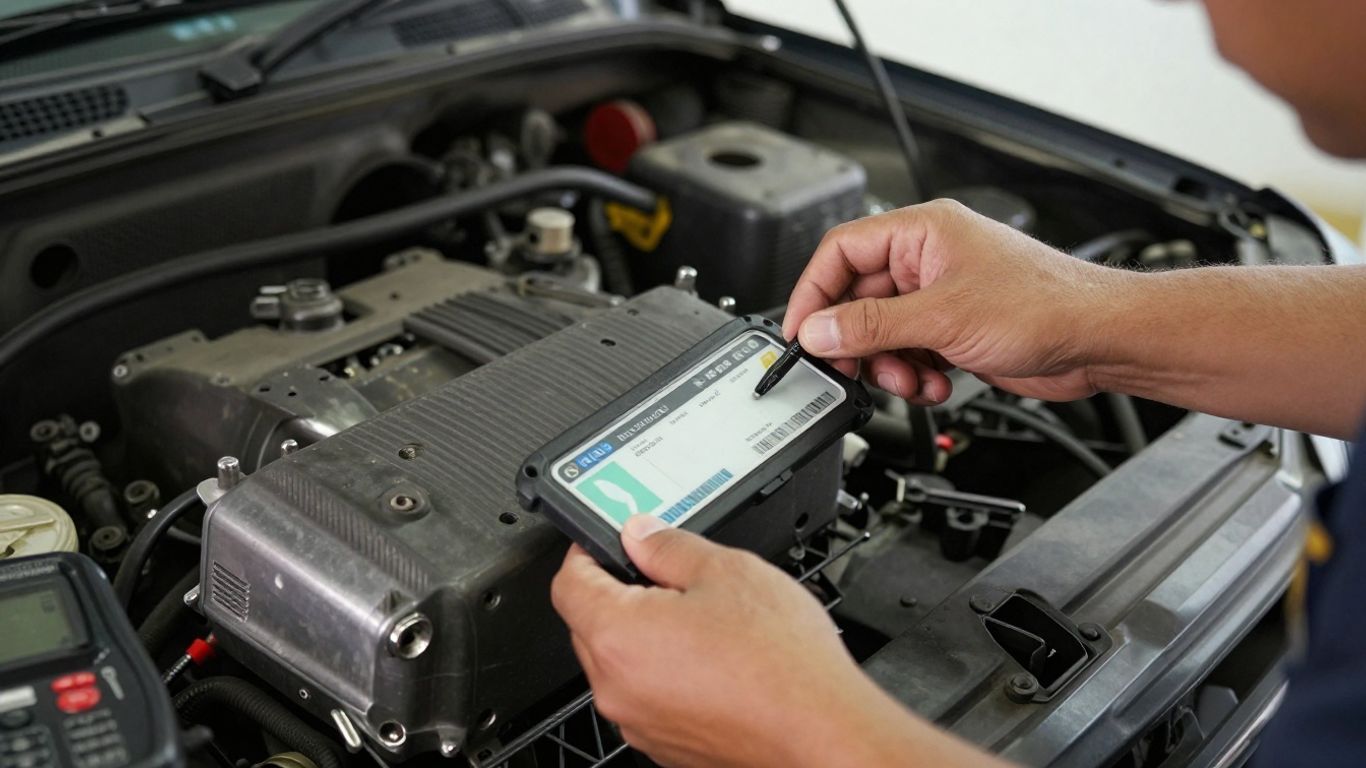
Ask the supplier to confirm the part number, vehicle application, side or axle position, and whether the quoted price includes required seals, brackets, clips, or fasteners. Written confirmation is preferable for an expensive or special-order component. It also gives you something concrete to compare when the parcel arrives.
A reliable exchange should leave no ambiguity about whether the part is new, remanufactured, or used. Clarify the expected delivery date as well, especially if the vehicle is needed for work or travel.
Checking left-hand and right-hand component differences
Many Pajero parts are side-specific, including mirrors, lamps, suspension pieces, brake components, and some interior fittings. “Driver side” can also be interpreted differently across markets, so use left-hand or right-hand as viewed from inside the vehicle facing forward. Include a photograph if the naming remains unclear.
Before ordering, compare the old part’s mounting points and connector position with the supplier’s image or technical description. A side mismatch can be obvious only after the vehicle is partially dismantled.
Evaluating part quality, price, and warranty
Price comparison is most useful when every quote covers the same specification. A low-priced part may exclude hardware, have shorter coverage, or require extra freight. A higher-priced option may be reasonable when the part is difficult to fit, critical to safety, or likely to be kept for many years.
Read the conditions before treating a warranty as a guarantee of a free repair. Installation requirements, proof of purchase, maintenance records, and exclusions can all affect a claim.
When genuine Mitsubishi parts are worth the cost
Mitsubishi Genuine Parts can be worth considering when exact fit, original appearance, or a low tolerance for installation problems is the priority. They are also a practical option for parts with complicated fitment or limited aftermarket choice. The local dealership source describes Mitsubishi Genuine Parts and Accessories as available for purchase through its parts service.
For routine consumables, compare the genuine option with reputable alternatives on specification and warranty rather than assuming one category is always best. The sensible choice depends on the part, the vehicle’s condition, and the cost of getting the job wrong.
Assessing used parts for wear and damage
Inspect a used part for cracks, distortion, corrosion, fluid staining, worn bushings, damaged threads, and brittle plastic. Ask how the item was removed and whether it was tested before removal. For electrical parts, request information about water exposure and connector condition.
Photographs should show the actual item from several angles. If the supplier cannot describe its condition clearly, the apparent saving may not justify the risk or the return freight.
Comparing warranties and return policies
Compare the warranty period, what it covers, and who pays for return shipping. Some policies cover replacement of the part but not labour, diagnosis, towing, or related damage. Special-order and electrical components may have additional exclusions.
A useful warranty is only as valuable as the fitment information and evidence supporting a claim.
Keep the invoice, packaging, confirmation messages, and installation records. These documents make a genuine problem easier to explain and can prevent a disagreement about whether the wrong part was supplied.
Calculating delivery, fitting, and installation costs
Calculate the complete repair cost before choosing the part. Add delivery, consumables, specialist tools, diagnostic time, fitting, wheel alignment, fluid disposal, and any related seals or fasteners. For a heavy component, ask for a freight quote rather than relying on a standard delivery estimate.
A part that costs slightly more but arrives promptly and fits correctly may be cheaper overall than a discounted item that causes delays or a second booking. Put both options on paper before deciding.
Buying and installing Pajero parts safely
Safe purchasing continues after the order is placed. Confirm what you ordered, inspect the delivery, and decide honestly whether you have the tools and experience for the installation. Vehicle support, electrical isolation, torque settings, and correct disposal all matter as much as the part itself.
Do not dismantle the vehicle until the replacement has been checked where practical. This is particularly helpful when the vehicle is needed daily or the repair involves a component that will leave it immobile during the work.
Preparing the details suppliers need
Prepare the VIN, build date, engine and transmission details, registration information where appropriate, part description, side or axle position, and photographs of the old component. Mention modifications, towing equipment, suspension changes, and warning lights. A clear request reduces back-and-forth and helps the supplier identify hidden variations.
Also state whether you need the complete assembly or only a serviceable subcomponent. This can prevent receiving a bare component when the installation requires brackets, seals, wiring, or mounting hardware.
Inspecting parts when they arrive
Open the parcel carefully and compare the item with the order confirmation before removing protective packaging. Check the part number, quantity, side, finish, connectors, threads, seals, and included hardware. Photograph damage or incorrect items immediately, keeping the packaging until the issue is resolved.
Do not install a visibly damaged or questionable part just to meet a deadline. Contact the supplier first and ask for written instructions about replacement or return.
Deciding between DIY and professional installation
DIY work can suit owners who have the correct tools, a stable work area, repair information, and enough time to proceed carefully. Professional installation is preferable for airbags, brakes, steering, suspension, fuel systems, high-current electrical work, and jobs requiring calibration or specialist equipment. A professional can also identify related faults while the vehicle is apart.
If you do the work yourself, follow the vehicle’s service information, support the vehicle securely, and use the specified tightening procedures. When a job affects alignment, fluid systems, or safety, arrange the appropriate inspection before driving normally.
Disposing of old automotive parts responsibly
Old oil, coolant, batteries, tyres, brake components, and electronic parts should not be placed in ordinary household bins. Ask the workshop, parts supplier, council, or approved recycling facility about accepted materials and drop-off requirements. Drain and store fluids safely, away from children, pets, soil, and stormwater.
Keep reusable packaging separate and clean any salvageable metal before recycling. Responsible disposal is a small final step, but it prevents hazardous materials and bulky components from becoming someone else’s problem.
Conclusion
A successful Pajero parts purchase starts with precise vehicle details and ends with careful inspection and safe installation. Compare the full cost of each option, confirm fitment with the supplier, and use specialist help when the repair involves safety, complex systems, or uncertain diagnosis. That process makes sourcing parts around Castle Hill more straightforward and reduces the chance of an expensive mismatch.