

Key Takeaways
Finding the right Mitsubishi wrecker in Sydney takes more than choosing the nearest listing. Check fitment, condition, pricing, business details, and disposal practices before committing.
- Search local wreckers and compare their stock, hours, and service areas.
- Match used parts by model, year, trim, and VIN whenever possible.
- Ask about testing, condition, warranties, returns, and delivery charges.
- Inspect parts and confirm payment and collection arrangements before buying.
- Prepare ownership documents and choose responsible recycling for vehicle disposal.
Understand what Mitsubishi wreckers in Sydney offer
Mitsubishi wreckers can be useful when a new replacement is too expensive, unavailable, or unnecessary for an older vehicle. Their services may include selling recovered components, dismantling unwanted vehicles, and arranging vehicle disposal. The exact stock and services vary, so it helps to ask specific questions rather than rely on a broad online description.
Used Mitsubishi parts and components
A wrecker may have engines, transmissions, suspension components, body panels, lights, mirrors, interior fittings, wheels, and smaller mechanical parts available from dismantled vehicles. Availability changes constantly, particularly for popular models or older cars. Before asking for a price, gather the part name, your vehicle details, and any number stamped on the original component.
A clear part description makes the conversation easier. A photograph of the damaged item can also help a sales team identify whether you need a complete assembly or only a replaceable section.
Vehicle dismantling and salvage services
Dismantling involves removing usable components from a vehicle and separating materials that can be recycled or disposed of appropriately. If you are buying a part, ask whether it has already been removed, cleaned, and checked, or whether it will need to be taken from a vehicle after you order it. That distinction can affect both timing and price.
Salvage vehicles may have accident damage, flood exposure, mechanical failure, or simply reached the end of their useful road life. A responsible wrecker should be able to explain the known condition of a component without presenting an uncertain part as guaranteed.
Cash-for-cars and vehicle disposal options
Some wreckers also accept unwanted Mitsubishi vehicles for removal, dismantling, or recycling. Ask how the quote is calculated, whether pickup is included, and what paperwork is required to transfer or dispose of the vehicle. If the car is not running, confirm that the collection vehicle can access its location.
It is wise to keep written confirmation of the agreed amount and pickup arrangements. That simple record can prevent confusion if the vehicle condition, location, or ownership details are questioned later.
Parts for popular Mitsubishi models
Stock commonly changes around vehicles that are widely driven in the area, but no model should be assumed to be available. State the exact model, generation, body style, engine, transmission, and approximate year when making an enquiry. A part that fits one version may not suit another, even when the exterior looks nearly identical.
For older or less common Mitsubishi vehicles, ask whether the wrecker can search its broader inventory or contact you when a matching vehicle is dismantled. That may be more productive than repeatedly checking a generic parts page.
Search for reputable Mitsubishi wreckers near you
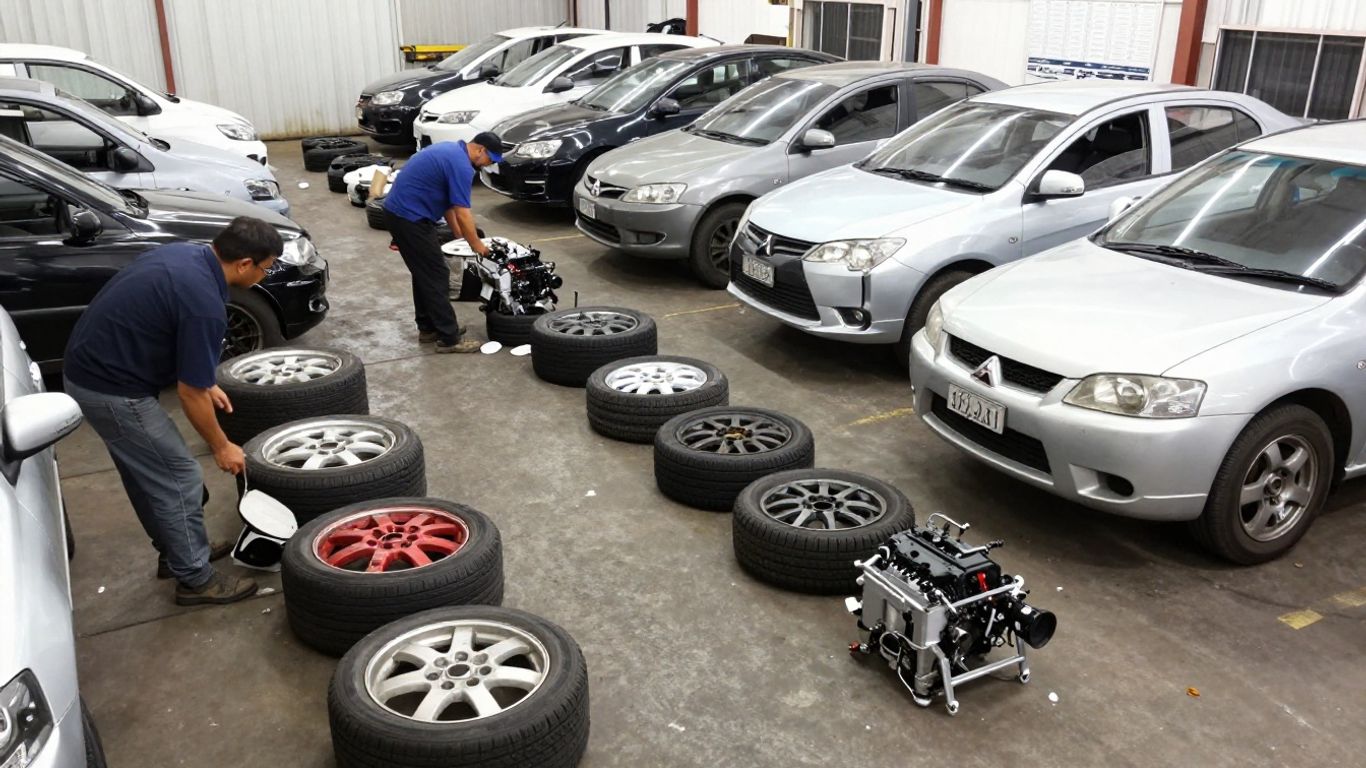
When deciding where to find Mitsubishi wreckers in Sydney, start with several nearby options rather than the first result you see. Search results can reveal useful contact details, but they do not by themselves confirm stock quality or after-sales support. Compare the information you find online with a direct phone call or email.
Using local search and online directories
Use search terms that include your suburb, the Mitsubishi model, and the part you need. Business directories, map listings, and review pages can help identify operating locations and contact methods. Treat reviews as background rather than proof, and look for consistent information across the business website, directory listing, and staff response.
A direct enquiry is often the fastest way to learn whether the business sells parts to the public, ships interstate, offers pickup, or handles vehicle removal. Keep your request focused so the response is easy to compare with other wreckers.
Comparing wreckers across Sydney suburbs
Sydney’s distances and traffic can make a nearby supplier more convenient even if its listed price is slightly higher. Compare the total cost, including travel, freight, delivery time, and the effort required to return an unsuitable part. A distant wrecker may still be practical when it has the correct component ready to dispatch.
Think about the urgency of the repair as well. For a vehicle that is already off the road, confirmed availability may matter more than a small difference in the advertised price.
Checking business details and operating hours
Before visiting, verify the business name, physical address, phone number, trading hours, and collection arrangements. Some yards operate from industrial areas with limited public access, while others require customers to order parts before arriving. Calling first can save a wasted trip, especially on weekends or public holidays.
Ask whether identification, a booking, or a suitable vehicle is needed for collection. Clear procedures usually indicate that the business has a defined process for handling parts and customers.
Confirming whether the wrecker stocks your model
Give the wrecker enough information to search accurately: model, year, trim, engine size, transmission type, and the required component. If you have a registration number or VIN, provide it through a trusted contact channel and ask the staff member to repeat the matching details. Do not assume a generic “Mitsubishi part” listing is sufficient.
If the part is not immediately available, ask whether an equivalent component is suitable or whether the business can check incoming stock. Get any expected wait time in writing before making payment.
Check the quality and compatibility of used parts
A low price is only useful when the part fits and performs as expected. Used components can differ in wear, specifications, and included hardware, even when they share a similar description. Take time to establish exactly what is being offered and what condition it is in.
Matching parts by model, year, and trim
Fitment can depend on more than the model badge. Engine code, drivetrain, body style, trim level, production year, and mid-generation changes may all affect compatibility. Compare the original part’s markings and connector layout with the replacement before agreeing to buy.
For electrical and engine components, a visual match is particularly unreliable. Ask whether the seller has checked the identifying number or cross-reference information rather than relying only on photographs.
Comparing genuine, aftermarket, and recycled components
A genuine component generally comes from the vehicle manufacturer’s supply chain, while an aftermarket component is produced by another manufacturer. A recycled part is recovered from another vehicle and may offer a practical option when its condition and fitment are confirmed. These categories are not interchangeable, so ask which one you are being quoted.
The right choice depends on the repair, budget, age of the vehicle, and availability of new parts. Make sure the invoice or written quote describes the part accurately, including whether it is complete and whether accessories are included.
Asking about testing, condition, and warranties
Ask what testing has been carried out and whether the part is sold as working, inspected, untested, or suitable only for dismantling. For a used engine or gearbox, ask about mileage if known, included ancillaries, and any conditions attached to installation. For bodywork, request details about dents, paint damage, corrosion, and colour variation.
A warranty can reduce risk, but its length and exclusions matter. Read the terms before paying, and ask whether labour, freight, diagnostic costs, or return shipping are excluded.
A used part is a sensible purchase only when its identity, condition, and return terms are clear.
That principle applies even when the component looks clean or comes from a familiar model. Written details give you something practical to check if the part does not match the original diagnosis.
Providing the VIN for accurate identification
The VIN can help a wrecker distinguish between similar vehicle variants and confirm the production specification. Send it only through a legitimate business channel, and check that the returned match describes your vehicle correctly. A VIN improves identification, but it does not replace a mechanic’s diagnosis of the fault.
When possible, provide a photograph of the old part as well. The combination of VIN information, visible markings, and a clear description gives the seller a stronger basis for confirming fitment.
Compare prices, availability, and customer service
A fair comparison should cover more than the number attached to a part. Include condition, warranty, delivery, collection, returns, and the time you will wait for the item. Two quotes that look similar at first may offer very different levels of certainty.
Requesting detailed quotes for Mitsubishi parts
Ask for the part number or identifying description, condition, price, tax treatment where relevant, warranty period, and availability. Confirm whether the quote covers a complete unit or only the named component. If installation hardware, sensors, brackets, or accessories are not included, have that stated clearly.
A detailed quote helps you compare like with like and reduces misunderstandings when the order is processed. Keep the quote until the part has been received and checked.
Evaluating shipping, pickup, and delivery fees
Freight charges can vary with the size, weight, fragility, and destination of the part. Engines, transmissions, doors, and glass may require different handling from small electrical components. Ask how the item will be packaged, whether tracking is provided, and what happens if it arrives damaged.
Local pickup may avoid freight but can involve loading equipment or a suitable vehicle. Confirm the collection window before travelling, especially if the part has already been removed from a donor vehicle.
Comparing warranty and return policies
Read the warranty and return policy together because they may cover different situations. A warranty may address a component that fails, while a return policy may address an incorrect fitment or a change of mind. Ask whether the seller must approve a return before you send anything back.
Keep the invoice, messages, photographs, and packaging until installation is complete. These records can make a genuine issue easier to resolve.
Recognizing unusually low prices
A very low price can reflect heavy wear, missing parts, uncertain provenance, or a listing that is no longer current. It is not automatically a bad deal, but it deserves more questions. Ask why the price differs from comparable quotes and whether the part has been tested.
The cheapest option may become expensive if it requires another removal, special freight, or a second repair. Judge the offer by its total cost and risk, not just the headline figure.
Buy Mitsubishi parts safely from a wrecker
Buying used parts is usually straightforward when the transaction is documented and the item is checked before installation. Keep communication on a business channel, confirm who is responsible for freight, and avoid rushing because a listing claims limited availability. A careful purchase protects both your budget and your vehicle.
Confirming payment and collection procedures
Before paying, confirm the business name, invoice details, accepted payment methods, collection address, and expected dispatch date. Be cautious when payment is requested through an unrelated account or when the seller refuses to provide a written description of the item. For a high-value component, ask whether staged payment or inspection before collection is available.
Bring the invoice or order reference when collecting the part. Check that the packaging and component match the description before loading it.
Inspecting parts before accepting them
Look for cracks, corrosion, bent mounting points, damaged connectors, missing fasteners, fluid leaks, and signs of unauthorised repair. Photograph the part and packaging at collection or delivery, particularly if the item is large or fragile. Do not install a component that appears materially different from what was ordered.
For mechanical or safety-related parts, have a qualified technician inspect the item when you are uncertain. A short inspection can prevent further damage caused by an unsuitable replacement.
Protecting personal and vehicle information online
Provide only the details needed to identify the vehicle and complete the transaction. A VIN may be useful for fitment, but avoid posting it publicly alongside your full address, registration documents, or personal contact information. Use secure payment methods and check the website or email address carefully before sending documents.
If arranging vehicle collection, share access instructions privately and remove unnecessary paperwork from the car. Good information handling is part of a safe sale, not an extra complication.
Avoiding counterfeit or incorrectly labeled parts
Ask for clear photographs of labels, casting marks, connector types, and part numbers when the item’s identity matters. Compare those details with your original component and question vague descriptions such as “fits all models.” Incorrect labels may lead to wasted labour or damage during installation.
A seller who can explain the source, condition, and fitment of a part is easier to deal with than one who offers no useful detail. When the answers remain unclear, wait for a better-documented option.
Arrange vehicle disposal or dismantling in Sydney
Disposing of an unwanted Mitsubishi involves more than handing over the keys. You need to confirm ownership, organise access for pickup, and understand what happens to registration and number plates. Planning these details in advance makes the removal safer and reduces later administration.
Preparing a Mitsubishi for pickup
Tell the wrecker whether the vehicle starts, rolls, steers, and can be reached by a tow truck. Mention narrow driveways, underground car parks, locked gates, steep access, or other obstacles. Remove loose items from the cabin and boot, then keep the keys, service records, and ownership documents ready.
If the vehicle contains damaged batteries, leaking fluids, or other hazards, disclose them before pickup. The collection provider can then bring appropriate equipment and avoid surprises at the site.
Understanding registration and ownership requirements
Ask what proof of ownership or identity is needed before the vehicle is collected. Requirements can vary with the vehicle’s registration status and the transaction, so confirm the current process with the relevant NSW authority as well as the wrecker. Keep a signed receipt or disposal record showing when the vehicle changed hands.
If registration cancellation or transfer is your responsibility, complete it promptly and retain confirmation. Do not assume vehicle removal automatically completes every registration obligation.
Removing personal belongings and number plates
Search the glovebox, centre console, door pockets, boot, under-seat areas, and storage compartments before the vehicle leaves. Remove toll tags, garage remotes, documents, tools, child seats, and personal data stored in connected devices. Number plate requirements should also be confirmed before pickup, since the correct process depends on the vehicle’s registration circumstances.
Take a few photographs of the vehicle and its condition at handover. They provide a useful record alongside the receipt and ownership paperwork.
Choosing environmentally responsible recycling services
Ask how the vehicle will be dismantled, where fluids and batteries will go, and whether usable components and recyclable metals are recovered. Responsible processing keeps hazardous materials out of ordinary waste streams and gives serviceable parts another use. It also creates a clearer distinction between formal recycling and simply abandoning a car.
Choose a provider that explains its process, paperwork, and collection terms without making vague promises. Once the vehicle is removed, keep the disposal record and any confirmation needed for your registration files.
Conclusion
Finding Mitsubishi wreckers in Sydney is easier when you compare complete offers rather than chasing the lowest advertised price. Verify fitment with detailed vehicle information, ask about condition and returns, document the purchase, and prepare ownership and pickup details carefully when disposing of a vehicle. A few deliberate checks can make used parts and responsible recycling practical options.