

Key Takeaways
Selling an unwanted Mitsubishi on the Gold Coast is usually easier when you have the vehicle details, ownership paperwork, and a clear idea of its condition ready before requesting a quote.
- Wreckers may consider older, damaged, incomplete, and non-running Mitsubishis.
- Accurate details and photos help produce a more realistic initial offer.
- Confirm whether towing, paperwork, and payment are included before accepting.
- Remove personal belongings and prepare keys, plates, and documents for collection.
- Responsible dismantling can recover usable parts and recyclable materials.
How Mitsubishi wreckers buy unwanted vehicles on the Gold Coast
Selling to a wrecker is generally a practical alternative to repairing or privately advertising a vehicle that has lost its usefulness. The process usually starts with basic information, followed by an offer and, where necessary, an inspection. For anyone searching for Mitsubishi wreckers that buy unwanted Mitsubishis Gold Coast, the main task is to describe the car honestly and confirm the collection arrangements clearly.
What happens after you request a quote
A quote request normally begins with the Mitsubishi’s model, year, location, registration status, and general condition. You may also be asked whether it starts, whether it can be driven, and whether major components are missing. The first figure is often based on the information supplied, so accuracy matters more than optimistic wording.
Once the details have been reviewed, the buyer may give an initial estimate or arrange a closer assessment. Ask what the offer includes and whether it can change after inspection. A straightforward conversation at this stage helps prevent confusion when the vehicle is collected.
How vehicle inspections affect the offer
An inspection gives the buyer a chance to check the vehicle’s identity, completeness, damage, and mechanical condition. It may confirm that the description was accurate, but it can also reveal missing parts, severe corrosion, flood damage, or access problems that affect the value. Photos can support an estimate, although they cannot always show everything.
The inspection does not need to be treated as an argument over every mark. Instead, compare the final assessment with the information you originally provided. An honest condition report gives both sides a better starting point and makes a revised offer easier to understand.
Why wreckers buy damaged, older, and non-running Mitsubishis
A Mitsubishi does not have to be roadworthy to retain value. Its engine, transmission, panels, interior, wheels, electrical components, or other recoverable materials may still be useful, depending on condition and demand. An older car can therefore be worth more as a source of parts than as a complete vehicle.
Non-running vehicles can also suit buyers who have the equipment and processes to move them safely. Their value is usually assessed as a combination of usable components, metal, and the cost of transport and handling. That is why a clear description of what remains with the car is helpful.
How dismantling and recycling fit into the process
After purchase, a vehicle may be assessed for reusable parts before its remaining shell and materials are processed. Fluids, batteries, tyres, glass, and metal need to be handled separately rather than treated as ordinary household waste. The exact pathway depends on the vehicle’s condition and the buyer’s facilities.
This process is one reason wreckers can consider vehicles that are uneconomical to repair. A damaged Mitsubishi may still provide parts for another car, while its metal and other materials can move into recycling streams. The result is a practical end to a vehicle that no longer suits its owner.
Which Mitsubishi models and conditions are accepted
Mitsubishi wreckers commonly assess a wide range of passenger cars, SUVs, utes, and older vehicles. Acceptance depends on the individual car rather than only its badge or age. Location, completeness, demand for parts, and the cost of collection can all influence whether an offer is made.
Popular Mitsubishi models commonly purchased
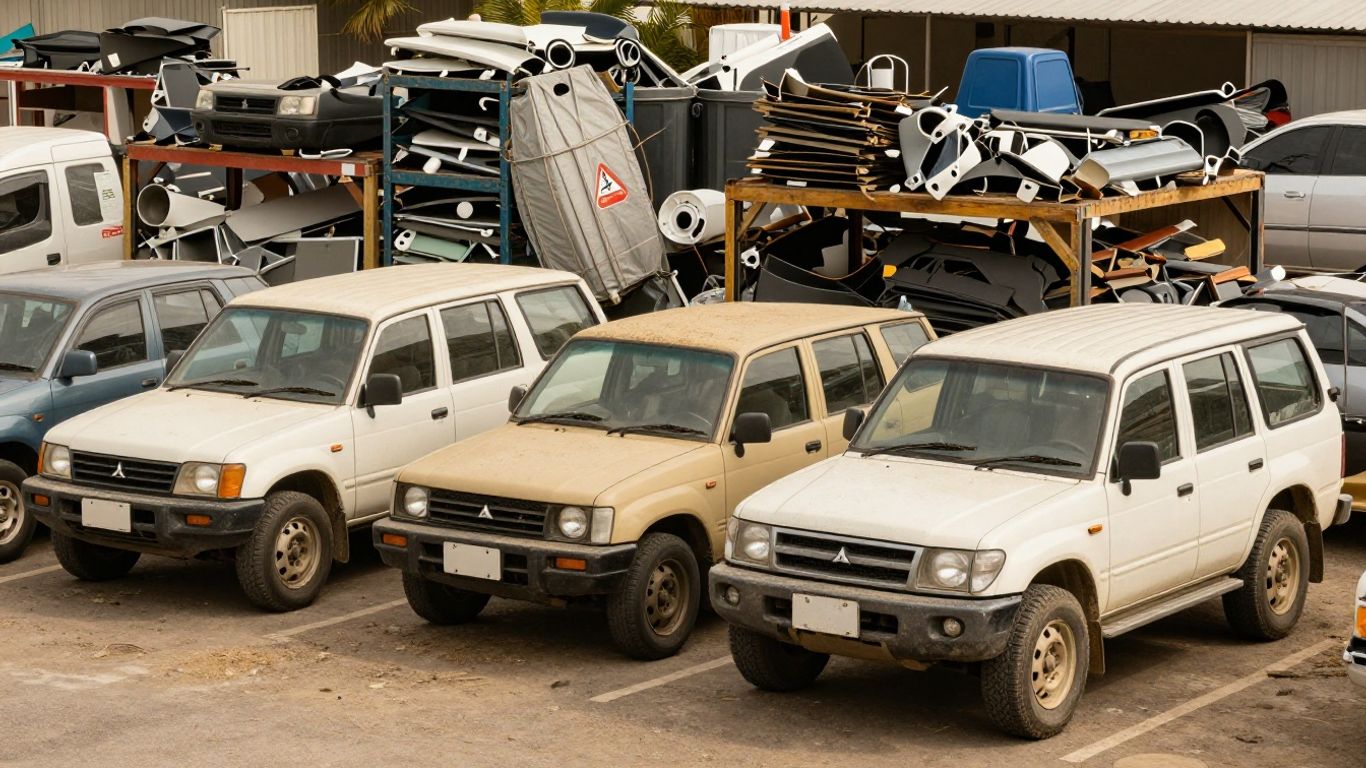
Commonly seen Mitsubishi models may include Lancer, Triton, Outlander, ASX, Pajero, Magna, 380, and Colt vehicles. That does not mean every example will receive the same offer, since trim level, drivetrain, year, and condition can vary considerably. Supplying the exact model designation is more useful than naming only the make.
If you are unsure of the variant, check the registration information, compliance plate, owner documents, or vehicle identification number. A wrecker can then assess the car against the parts and materials it may contain. Even an unpopular trim can have worthwhile components when the right match is needed.
Damaged, written-off, and accident-affected vehicles
Crash damage does not automatically make a Mitsubishi worthless. Panels, lights, wheels, interior pieces, and mechanical assemblies may remain usable when they are inspected and removed appropriately. The severity and location of the damage are central to any assessment.
Tell the buyer whether airbags have deployed, whether the car has been declared a write-off, and whether it has been exposed to fire or water. These details affect safety, dismantling, and the potential for parts recovery. Hiding major damage may only delay the sale or lead to a changed offer.
Non-running cars and vehicles with mechanical problems
A Mitsubishi that will not start can still be considered, but the reason for the failure is useful information. A flat battery is different from a seized engine, failed transmission, immobilizer fault, or major electrical problem. Mentioning symptoms and known repairs helps the buyer estimate handling and salvage value.
Also explain whether the vehicle rolls, steers, and can be accessed by a tow truck. A car that is stationary in a narrow driveway may need different equipment from one parked on a broad, level surface. These practical details can matter as much as the mechanical fault.
Incomplete vehicles, flood cars, and end-of-life Mitsubishis
Incomplete cars should be described by listing what has been removed, such as the engine, wheels, battery, catalytic converter, seats, or panels. Flood-affected vehicles need especially careful disclosure because water can damage wiring, modules, upholstery, and mechanical systems even when the exterior looks acceptable.
End-of-life Mitsubishis may be assessed mainly for remaining parts and recyclable materials. Do not attempt to start a flood-damaged vehicle or move an unsafe car without suitable equipment. Clear information allows the buyer to decide whether collection is practical.
How to get an accurate Mitsubishi wrecking quote
A useful quote request is brief but specific. The buyer needs enough information to distinguish a complete, running vehicle from one that is damaged or partly dismantled. Good details reduce back-and-forth and make it easier to compare offers that cover similar services.
Details to provide about the vehicle
Start with the model, year, body style, engine, transmission, and approximate location. Add the registration status, whether you hold the title or ownership documents, and whether the keys are available. Describe starting, driving, accident, flood, fire, and missing-part issues plainly.
Photos should show all sides, the interior, engine bay, wheels, damage, and the place where the vehicle is parked. Include the instrument panel if it can be photographed safely. The more relevant information supplied at the beginning, the less likely a basic quote is to be misunderstood.
Why the model, year, trim, and condition matter
The same Mitsubishi name can cover several generations and specifications, with different engines, transmissions, body panels, and electrical components. Year and trim help identify which parts may be compatible. Condition then determines whether those parts are likely to be reusable.
A complete car with a failed engine may be assessed differently from a stripped shell of the same year. State what is present, what is damaged, and what has already been removed. Small details can change the practical cost of dismantling and transport.
Parts demand and salvage value
A wrecker considers more than the vehicle’s former road value. Potentially reusable parts, the condition of the shell, recoverable metals, and local demand all contribute to the assessment. The buyer must also account for labor, storage, testing, transport, and responsible disposal.
The following comparison illustrates why two cars with the same model badge may receive different offers:
| Vehicle detail | Possible effect on assessment |
|---|---|
| Complete and undamaged interior | More components may be recoverable |
| Major accident damage | Usable parts may be limited or costly to remove |
| Non-running condition | Collection and testing may require extra work |
| Missing engine or panels | Fewer saleable components remain |
The table is only a guide, not a valuation formula. A precise offer still depends on the particular vehicle, its location, and what an inspection confirms.
When photos and a physical inspection are necessary
Photos are especially useful for an initial estimate because they show visible damage, completeness, and access conditions. They are less reliable for hidden rust, water intrusion, mechanical faults, or component testing. A physical inspection becomes more important when the vehicle is unusual, heavily damaged, or difficult to describe.
Be available to answer follow-up questions and mention anything not visible in the images. If the car is at a workshop, storage yard, or restricted property, confirm who can provide access. That simple preparation can make the final assessment more efficient.
How to prepare your Mitsubishi for sale
Preparation does not mean repairing every fault before contacting a wrecker. It means making the sale lawful, safe, and easy to complete. Gather the information that proves ownership, remove your belongings, and explain any hazards before pickup.
Documents and ownership details to gather
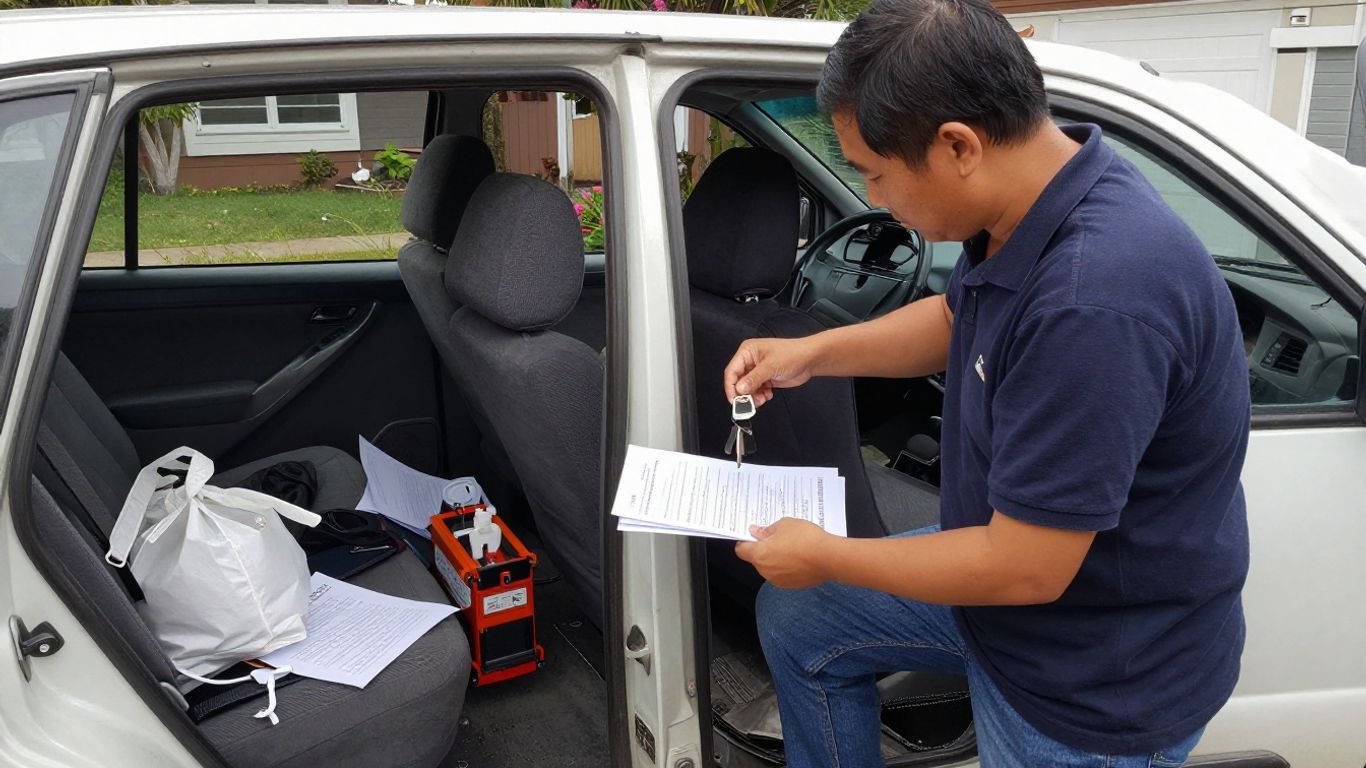
Keep available any registration papers, proof of ownership, identification, and vehicle identification details that apply to the sale. Requirements can vary, so ask the buyer what documentation is needed before collection. If more than one person owns the vehicle, clarify who must approve the transaction.
Do not hand over documents containing sensitive information without understanding why they are required. Make sure the vehicle description on the paperwork matches the car being sold. Resolving ownership questions early is much easier than doing so while a tow truck is waiting.
Personal belongings and registration plates to remove
Search the cabin, glovebox, center console, trunk, door pockets, and under the seats. Owners often overlook sunglasses, chargers, tools, parking cards, and paperwork. Remove personal data from infotainment systems and navigation devices where possible.
Ask about registration plates and follow the relevant local process for removing or surrendering them. Keep any receipts or cancellation confirmations you receive. The vehicle should leave with only the items you intend to sell.
Keys, service records, and spare parts
Provide every available key, including remote fobs and spare keys, and mention if one is missing. Service invoices, manuals, and records can help identify maintenance history and vehicle specifications, even if they do not transform the offer. Spare wheels or loose parts should also be disclosed.
Keep copies or photographs of documents you need for your records. Pack keys and paperwork together so they are not misplaced on collection day. This small amount of organization makes the handover less rushed.
Safe preparation for vehicles that cannot be driven
Do not force a non-running or damaged Mitsubishi onto the road merely to make pickup easier. Tell the buyer whether the steering is locked, the wheels roll, the brakes work, or the vehicle is obstructed. Mention steep driveways, underground parking, soft ground, and low clearance.
Keep children and bystanders away from the loading area and avoid working beneath an unsupported vehicle. If fluids are leaking or the car has fire or flood damage, disclose that before equipment arrives. Safe access is a shared responsibility.
Free car removal and payment options
Free removal may be available, but it should never be assumed from a headline or a brief phone call. Confirm the pickup area, vehicle condition, access requirements, and whether towing is included in the accepted offer. Payment terms should be equally clear before the handover.
When free towing is included
Ask whether removal is free for your exact location and vehicle condition. A car that rolls freely may be simpler to collect than one trapped behind another vehicle or parked in a difficult area. Clarify whether extra equipment, long-distance travel, or restricted access changes the arrangement.
Get the agreed terms in writing where possible. The phrase “free removal” should mean that you will not face an unexpected towing deduction, but the only safe way to know is to ask what the offer includes.
Preparing for pickup on the Gold Coast
Confirm the address, contact person, preferred time, and easiest entry route. Move other vehicles if needed and make sure gates or access points are open. If the Mitsubishi is in a body corporate complex, workshop, or secure facility, arrange permission in advance.
Leave enough space for the collection vehicle to position safely. Tell the buyer about tight turns, slopes, overhead limits, and any surface that could affect loading. Clear instructions reduce delays and protect property.
What happens during vehicle collection
The collector will generally verify the vehicle and its location before loading it. They may check the keys, identification details, condition, and agreed price. If something differs substantially from the original description, pause and discuss it before the vehicle is removed.
Take a few photographs of the car and its condition at handover, particularly if the process is being completed by someone else. Keep a record of the buyer’s details and any receipt or disposal paperwork. A calm, documented handover is useful for both parties.
How and when payment is made
Payment may be arranged at collection or through another agreed method, depending on the buyer’s process. Ask when funds will be transferred, whether the amount is final, and whether any deductions apply. Never rely on a vague promise of payment after the vehicle has already left.
Check the amount before signing a transfer or release document. If the payment method is electronic, confirm the transaction through your own account rather than relying only on a screenshot. Clear timing protects the seller from avoidable disputes.
How to choose a trustworthy Mitsubishi wrecker
A good wrecker should make the transaction understandable from the first quote through final collection. Local knowledge can help with access and towing, but it is not a substitute for transparent terms. Look for consistent information rather than a dramatic promise that is difficult to verify.
Checking licences, reviews, and local experience
Check whether the business has the registrations, licences, and permissions required for its work and location. Read recent reviews for patterns involving communication, payment, collection, and changed offers. One isolated complaint may not tell you much, but repeated issues deserve attention.
Ask how long the business has operated locally and whether it routinely handles unwanted or damaged vehicles. A professional answer should be specific without pressuring you to decide immediately. You should have time to understand the arrangement.
Comparing quotes and included services
Compare like with like. One quote may include removal and paperwork while another may be a vehicle-only figure that leaves you arranging transport yourself. Record the offered amount, pickup terms, payment timing, and any conditions attached to acceptance.
The highest number is not always the best practical deal if it can be reduced at pickup or requires costly towing. A slightly lower offer with clear, included services may leave you with a better result. Written details make that comparison much easier.
Warning signs of misleading offers
Be cautious when a buyer refuses to discuss the vehicle’s condition, will not explain deductions, or insists on a decision before answering basic questions. Sudden changes to the price after loading are another serious warning sign. So are requests for unusual fees that were never mentioned.
A trustworthy transaction should not depend on urgency or secrecy. If the terms keep shifting, stop and seek clarification. You are entitled to understand what you are agreeing to before releasing the vehicle.
Questions to ask before accepting a deal
Ask whether the offer is conditional, whether towing is included, what documents are required, and how missing keys or parts affect the price. Confirm who will collect the Mitsubishi and whether the buyer provides a receipt or disposal confirmation. Also ask what happens if the vehicle cannot be accessed as expected.
Write down the answers and the name of the person who provided them. This creates a simple record if the quote is made by phone. Clear questions are not difficult; they are a sensible part of selling an unwanted car.
What happens to a Mitsubishi after it is sold
The next stage depends on the vehicle’s condition and the wrecker’s operating process. Some cars are assessed for reusable components, while others are directed more quickly toward material recovery. In either case, responsible handling gives the vehicle a useful final pathway.
Testing and selling reusable Mitsubishi parts
Parts that appear suitable may be removed, cleaned, identified, and tested before being offered to repairers or vehicle owners. Their condition and compatibility still need to be checked for the specific repair. A used component is not automatically suitable simply because it came from the same model family.
This is where accurate vehicle identification matters again. Model year, engine type, transmission, and trim can affect fitment. Buyers should verify part compatibility before installation rather than relying on a general description.
Recycling metal, fluids, tyres, and batteries
Once reusable components have been separated, the remaining vehicle can be processed for materials. Metal, fluids, tyres, batteries, glass, and other items require different handling routes. Safe separation reduces contamination and makes more of the vehicle recoverable.
The precise sequence varies by facility and vehicle condition. Sellers do not usually need to manage these steps themselves, but they can ask how the car will be handled. That question is reasonable when disposal is part of the transaction.
Using genuine used parts for local repairs
A genuine used Mitsubishi part can sometimes provide a practical repair option when a new replacement is expensive or difficult to source. The part should still be checked for wear, damage, compatibility, and any available warranty or return terms. Critical components deserve particular care.
Repairers can use the vehicle identification number and original specifications to confirm fitment. Asking where the part came from and how it was tested may also help. Price matters, but suitability and condition matter just as much.
Environmental benefits of responsible vehicle disposal
Responsible disposal keeps useful components in circulation and reduces the amount of a vehicle sent directly to landfill. Recovering metal and handling hazardous materials appropriately can also reduce waste and environmental risk. These benefits depend on proper dismantling and recycling practices.
For the owner, selling through an established process is a practical way to close the vehicle’s life cycle. The Mitsubishi may no longer be roadworthy, yet its parts and materials can continue serving other purposes.
Conclusion
Selling an unwanted Mitsubishi on the Gold Coast is simplest when you provide accurate details, prepare the necessary documents, confirm towing and payment terms, and choose a buyer who explains the process clearly. Whether the vehicle is old, damaged, incomplete, or non-running, an honest assessment gives it the best chance of reaching a useful next stage.