

Key Takeaways
A cheap used Mitsubishi engine can be a sensible repair when the replacement is correctly matched and properly inspected. The lowest advertised price is not always the lowest total cost.
- Match the replacement engine to the exact Mitsubishi model, year, drivetrain, and engine code.
- Ask about mileage, testing, condition, included accessories, warranty, and return terms.
- Compare the full cost, including freight, fitting, fluids, seals, and required service parts.
- Use Melbourne suppliers when local inspection, pickup, or faster support matters.
- Prepare the vehicle and follow a careful installation and break-in process.
Understanding the used Mitsubishi engine market in Melbourne
The Melbourne market includes engines removed from damaged, retired, or dismantled vehicles, along with reconditioned and rebuilt options. Stock changes regularly, so two suppliers may quote different engines for the same Mitsubishi model. A careful buyer compares condition and compatibility alongside price. That approach makes it easier to find Cheap used Mitsubishi engines for sale Melbourne without treating the cheapest listing as the automatic choice.
Why drivers choose a used replacement engine
A used engine can cost less than replacing a vehicle or purchasing a new factory unit, particularly when the rest of the Mitsubishi is in good condition. It may also reduce repair time if a suitable assembly is already available. The key is to balance the vehicle’s value, the likely installation cost, and the seller’s information about the engine. The complete repair cost matters more than the engine price shown in a search result.
Common Mitsubishi models and engine types available
Availability commonly follows the number of Mitsubishi vehicles being dismantled and the age of the model. Buyers may find engines associated with vehicles such as the Lancer, ASX, Outlander, Pajero, Triton, Mirage, or Challenger, although stock is never guaranteed. Petrol and diesel engines can differ substantially in mounting, wiring, fuel systems, and control modules. Start with the vehicle identification details rather than assuming that an engine from the same model name will fit.
Used, reconditioned, and rebuilt engine differences
A used engine is generally sold in the condition described by the supplier after removal and inspection. A reconditioned engine has had selected components assessed or replaced, while a rebuilt engine is typically disassembled and restored to a defined standard. These labels can vary between businesses, so ask exactly what work was carried out. Request a written description of the assembly, not just a broad condition word.
How engine availability affects price and lead time
A common engine with several compatible applications may be easier to source and less expensive than a rare specification. Conversely, an engine that appears cheap but needs to be transported from interstate may take longer and cost more than a nearby alternative. Confirm whether the quoted unit is physically in stock, already removed, and ready for dispatch. The following comparison shows why availability should be discussed alongside price.
| Situation | Likely price effect | Likely lead-time effect | What to confirm |
|---|---|---|---|
| Common model, local stock | Often lower | Usually shorter | Exact engine code and mileage |
| Less common specification | May be higher | Often longer | Sourcing timeframe and deposit terms |
| Interstate stock | Freight may add cost | Depends on transport | Dispatch date and damage cover |
| Engine still awaiting removal | Quote may change | Removal adds delay | Whether the sale is conditional |
A supplier’s estimate becomes much more useful when it separates stock status, freight, and any removal work. Do not make a firm booking until those details are clear.
How to find the right replacement Mitsubishi engine
Correct identification is the foundation of a successful replacement. The model badge alone may not distinguish different generations, fuel systems, power outputs, or drivetrain layouts. Gather the vehicle identification number, build date, transmission type, drive configuration, and engine code before requesting quotes. A few minutes spent checking these details can prevent an expensive mismatch.
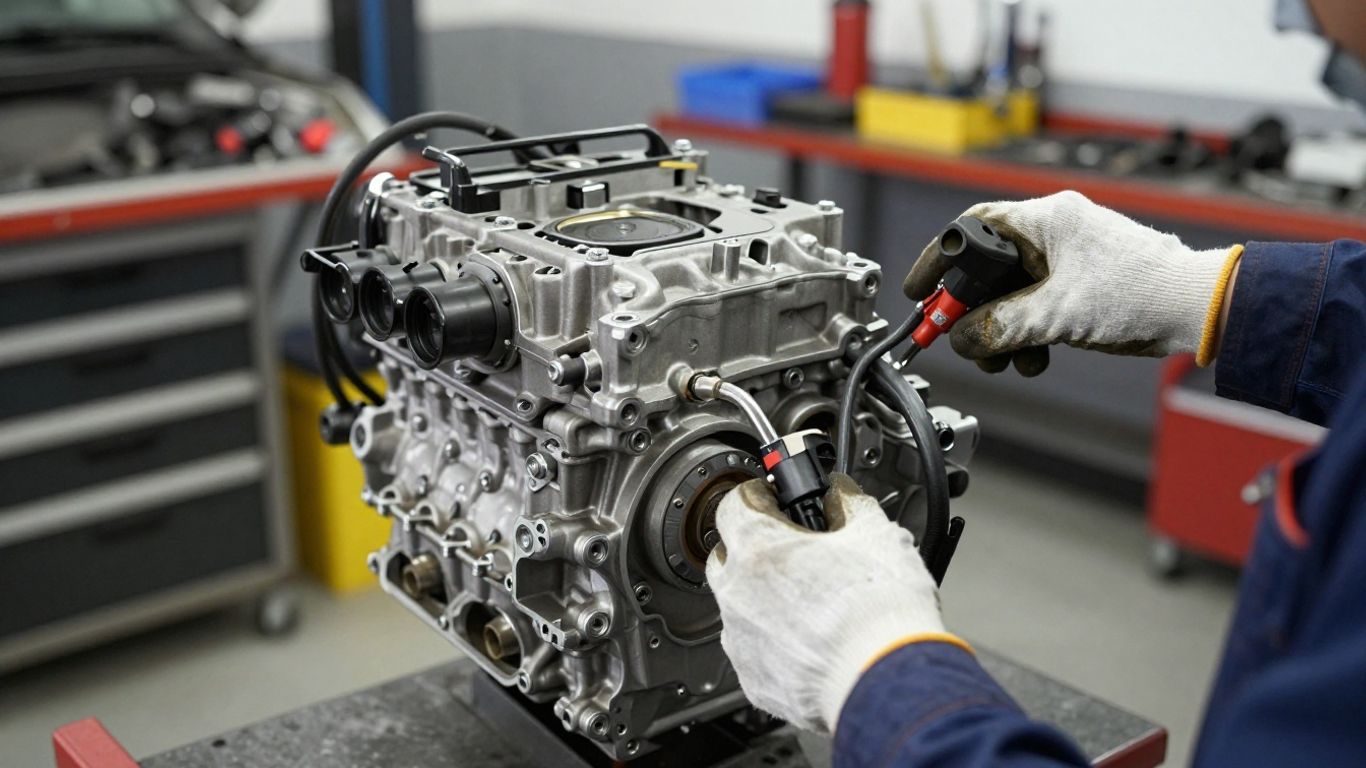
Matching the engine to your Mitsubishi model
Begin with the exact model, series, year, body style, and drivetrain. A Triton, Outlander, Pajero, or Lancer may have multiple engine choices across its production run. Confirm whether the replacement is intended for the same market specification and whether the supplier is selling a complete long motor, dressed engine, or assembly with accessories. Photographs can help, but they should support—not replace—written compatibility confirmation.
Checking engine codes and compatibility
The engine code is more reliable than a general model description because it narrows the possible specifications. Compare the code on the vehicle with the code supplied by the seller, then ask about any documented supersessions or interchange options. If the codes differ, get confirmation from a qualified mechanic or specialist before paying. Avoid relying on statements such as “should fit” when wiring and mounting details matter.
Comparing petrol and diesel engine options
Petrol and diesel replacements involve different fuel, intake, exhaust, and electronic requirements. Diesel engines may also bring additional considerations around turbocharging, injection equipment, and emissions hardware, depending on the vehicle. Ask whether the quoted engine includes the components your installation requires or whether you must transfer parts from the original unit. A lower price may simply reflect a more basic assembly.
Confirming transmission and electronic compatibility
The engine must work with the vehicle’s transmission, engine management system, sensors, immobiliser, and wiring. Automatic and manual applications can use different components even when the basic engine is similar. Clarify which accessories, brackets, sensors, and control units are included, and whether programming or component transfer will be needed. Have the installer review the quote before ordering if electronic compatibility is uncertain.
What to inspect before buying a used Mitsubishi engine
A used engine should be assessed as a mechanical component with a history, not just as a photograph on a listing. Ask what was known about the donor vehicle and what checks were completed after removal. If the engine cannot be inspected in person, request clear photographs, test results, and a written condition report. The more specific the evidence, the less room there is for misunderstanding.
Reviewing mileage and vehicle history
Mileage is useful context, but it is not a complete measure of condition. Ask whether the mileage is verified, estimated, or taken from the donor vehicle’s records. A vehicle damaged in a collision may have a better mechanical history than one retired because of a serious drivetrain fault. Find out why the donor vehicle was dismantled and whether the engine was running before removal.
Checking compression and internal condition
Compression results can reveal differences between cylinders and may point to worn rings, valves, or head-gasket problems. Ask how the test was performed and whether the engine was cold or warm. Depending on the engine and seller, additional checks may include leak-down testing, oil inspection, or turning the crankshaft by hand. A test result is most useful when it is linked to the exact engine being sold.
Inspecting the block, cylinder head, and accessories
Look for cracks, impact damage, corrosion, oil leaks, damaged threads, and signs of overheating around the block and cylinder head. Inspect the sump, manifolds, turbocharger where fitted, starter, alternator, sensors, and accessory brackets. Some engines are sold as a bare assembly, while others include attached equipment. Confirm every included component in writing so missing accessories do not become a surprise during fitting.
Asking for test results and condition reports
A reputable seller should be able to explain the inspection process in plain language. Ask for the mileage, compression figures if available, oil condition, visible faults, storage method, and any exclusions in the warranty. Written records are helpful because they give you something concrete to compare between suppliers. They also make it easier to resolve a disagreement about what was promised.
How to compare cheap Mitsubishi engine prices
Price comparisons are only meaningful when the quotes describe similar engines and similar levels of support. One listing may cover a bare engine, while another includes accessories, testing, freight, or a longer warranty. Ask each supplier for an itemised quote rather than comparing headline figures. This is where a seemingly cheap option can either prove worthwhile or lose its advantage.
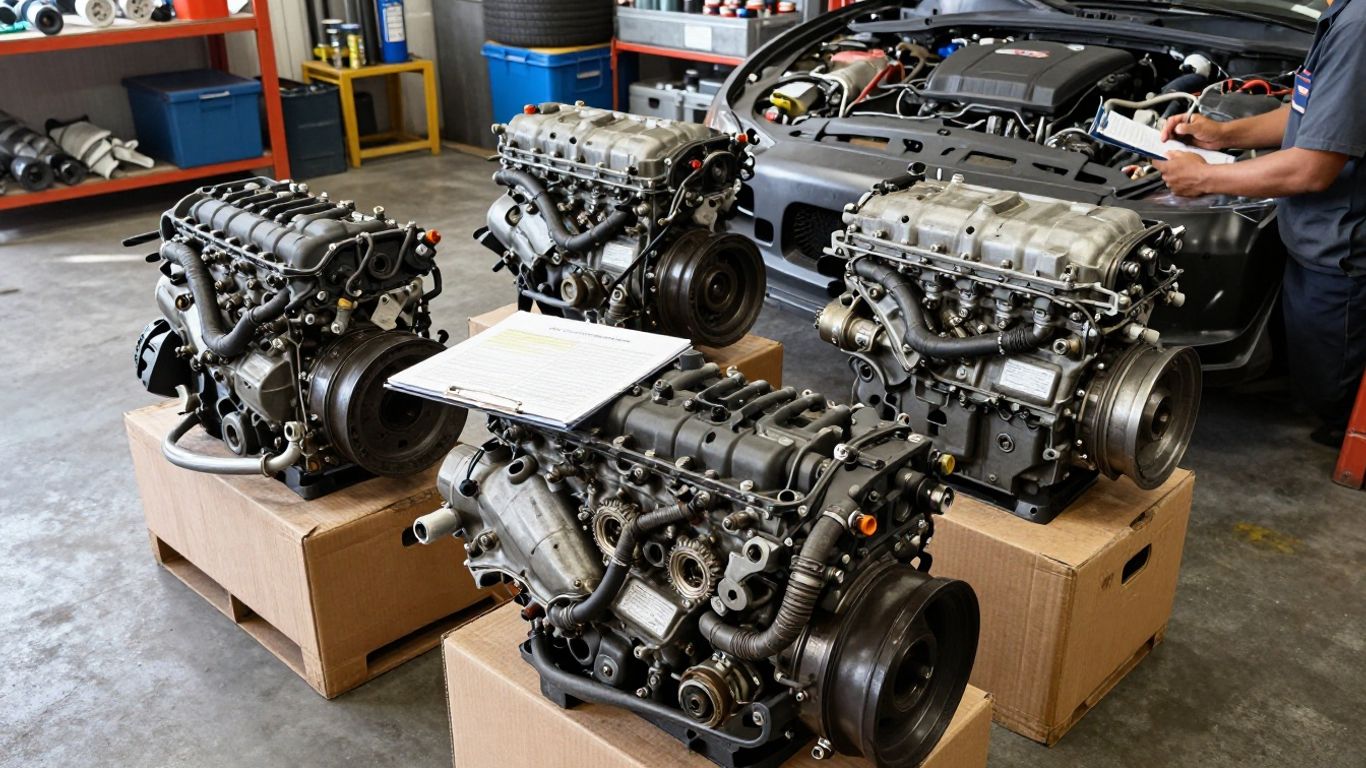
Understanding what the advertised price includes
Check whether the price includes the engine only, a complete assembly, removal from the donor vehicle, testing, GST, and a written warranty. Clarify whether the photograph shows the exact unit or a representative example. Also ask whether core exchange, deposit, or collection requirements apply. A clear quote should state what you will receive and what condition the seller believes it is in.
Factoring in freight, installation, and extra parts
The purchase price is only one part of the replacement budget. Freight, workshop labour, fluids, filters, belts, hoses, seals, gaskets, and transferred accessories can all affect the final figure. Some vehicles also need diagnostic work or programming after installation. Add these likely costs before deciding that one supplier is cheaper than another.
Comparing warranties and return policies
Read the warranty period, coverage, exclusions, and claim process before ordering. Some warranties cover the replacement engine but exclude labour, ancillary components, overheating, contamination, or incorrect installation. Ask how quickly a fault must be reported and whether the seller requires a qualified workshop to complete the fitting. A warranty is useful only when its conditions are understood and practical to follow.
Recognizing unusually low prices and hidden costs
An unusually low quote may reflect high mileage, incomplete accessories, limited testing, cosmetic damage, or a short warranty. It may also exclude freight, removal, or taxes. Treat the figure as a prompt for questions rather than proof of a bargain. A simple written comparison can expose hidden costs before money changes hands.
A fair comparison measures the whole repair, not just the number beside the engine listing.
After adding the missing costs, you may find that a slightly higher quote offers better value through clearer testing, more complete parts, or easier warranty support. The right choice is the one that fits both the vehicle and the budget.
Buying from Melbourne wreckers and engine suppliers
Local suppliers can make the buying process more practical because inspection, collection, freight, and follow-up may be easier to coordinate. That does not remove the need for careful questions. A Melbourne location is helpful, but the supplier’s records and terms still matter. Treat the purchase as a technical transaction rather than a quick online sale.
Questions to ask the seller before ordering
Ask for the engine code, donor model, mileage, reason for dismantling, test results, included parts, storage history, price breakdown, warranty, and return procedure. Confirm whether the exact engine is in stock and whether the quoted price is still valid. Ask what information the installer needs before fitting. Written answers are preferable to assumptions made during a brief phone call.
Verifying supplier experience and business details
Check that the business provides a physical address, usable contact details, tax invoice, and clear terms of sale. Ask how engines are identified and recorded after vehicles arrive for dismantling. A supplier who can explain its inspection and dispatch process is easier to deal with than one who gives only a vague promise of compatibility. Keep copies of the advertisement, quote, messages, and invoice.
Checking pickup and delivery options
Confirm whether pickup is available, how the engine will be packaged, and who is responsible for loading it. For delivery, ask about freight charges, estimated dispatch timing, tracking, and what to do if the crate or engine arrives damaged. Make sure someone can receive and inspect the shipment promptly. Photographs taken at delivery can document its condition before installation.
Understanding warranty claims and support
Before purchase, ask who handles a warranty claim, what evidence is required, and whether the seller wants the engine inspected before removal or repair. Find out whether labour, diagnostics, transport, and replacement parts are covered. Keep installation invoices and service records, since these may be required under the terms. Good support begins with knowing the process before a problem occurs.
Planning installation and protecting your replacement engine
Installation quality has a direct bearing on how well a replacement engine performs. The workshop should identify why the original engine failed and correct any related fault before starting. A replacement cannot compensate for a blocked radiator, contaminated fuel, or a neglected electrical issue. Planning the job carefully protects both the engine and the money already spent.
Preparing the vehicle before installation
Inspect the engine bay, mounts, wiring, transmission, exhaust, cooling system, and fuel lines before the replacement arrives. Clean contamination and repair damaged connectors or brackets. Confirm that the replacement’s mounting points and accessories have been compared with the original. If the initial failure involved overheating, oil starvation, or a timing failure, investigate the cause rather than treating the engine swap as the complete repair.
Replacing seals, fluids, and service items
Accessible seals, gaskets, filters, belts, hoses, spark plugs, and fluids are often sensible service items during installation, depending on their condition and the manufacturer’s schedule. Replacing inexpensive parts while access is easy can avoid duplicated labour later. Use the correct fluids and torque settings for the specific engine. The workshop should record what was replaced and what was transferred from the original assembly.
Ensuring the cooling and fuel systems are ready
Flush or inspect the cooling system if the old engine suffered contamination or overheating, and check the radiator, thermostat, water pump, fans, and hoses. The fuel system should also be clean and compatible with the replacement engine. Diesel applications may require particular attention to fuel contamination and injection components. Prime systems correctly and check carefully for leaks before the vehicle returns to normal use.
Following the recommended break-in process
Ask the installer whether the replacement is supplied with a specific running-in procedure. Until the engine’s condition and service baseline are established, avoid unnecessary heavy loads, monitor temperature and oil pressure, and follow the recommended checks. Recheck fluid levels and inspect for leaks after the first drives. Keep all receipts and records in case warranty support is needed.
Conclusion
Buying a used Mitsubishi engine in Melbourne can reduce the cost of a major repair, but value comes from accurate matching, documented condition, realistic total pricing, and careful installation. Compare complete quotes, ask direct questions, and choose the engine that offers the clearest fit and support rather than simply the lowest advertised number.