

Key Takeaways
Buying a used Triton gearbox in Brisbane is mostly an exercise in confirming compatibility, condition, and total installed cost before money changes hands.
- Match the gearbox to the Triton’s generation, engine, drivetrain, and transmission type.
- Use the transmission code and VIN rather than relying on a similar-looking unit.
- Ask how the gearbox was tested, stored, and sourced from its donor vehicle.
- Compare the complete project cost, including freight, labour, fluids, seals, and possible core charges.
- Keep every inspection note, invoice, and warranty document after installation.
1. Understand Mitsubishi Triton gearbox options
A Triton gearbox is not a universal part across every model year. Manual and automatic transmissions differ internally, and four-wheel-drive hardware adds another layer of fitment concerns. Before searching for Second hand Mitsubishi Triton gearboxes Brisbane, establish exactly what your vehicle needs. That early identification prevents a cheap-looking purchase from becoming an expensive adaptation job.
Manual and automatic gearbox differences
A manual gearbox relies on the clutch, flywheel, pressure plate, and driver input to transfer power, while an automatic uses hydraulic and electronic controls to select ratios. Their mounting points, bellhousing arrangements, sensors, and fluid requirements are different. A vehicle originally fitted with one type should not be assumed to accept the other without extensive supporting changes.
The practical distinction also affects the inspection. A manual unit should be checked for gear selection, bearing noise, and shaft play, while an automatic needs attention to fluid condition, shift behaviour, cooler connections, and electronic compatibility. The replacement should match the original transmission type unless a qualified workshop has planned a complete conversion.
Common Triton generations and transmission types
Triton specifications changed across generations, facelifts, engine families, and trim levels. Even when two vehicles look similar, their gearbox codes, transfer-case arrangements, sensors, or control systems may differ. Treat the model year and engine details as starting points, not as proof of a direct match.
Ask the supplier to identify the donor vehicle and the exact transmission code. A useful listing should distinguish whether the unit came from a manual or automatic Triton, whether it was fitted to a two-wheel-drive or four-wheel-drive vehicle, and which engine it served.
Two-wheel-drive versus four-wheel-drive compatibility
Four-wheel-drive Tritons may use a transfer case connected to the rear of the transmission, whereas a two-wheel-drive arrangement has different output hardware and driveline requirements. This can affect the tail housing, output shaft, mounts, and overall length. A gearbox that bolts to the engine may still be unsuitable for the rest of the vehicle.
Check the transfer-case interface and driveshaft arrangement before accepting a supplier’s assurance that a unit is interchangeable. Photographs can help, but the transmission code and measurements are more dependable than appearance alone.
Matching the gearbox to your engine and drivetrain
Engine torque, bellhousing pattern, clutch or converter arrangement, wiring, and control modules all matter. Diesel and petrol variants should be treated separately unless reliable parts information confirms otherwise. The same caution applies to trim level: equipment differences can sometimes affect sensors or associated drivetrain components.
Write down the vehicle identification number, engine code, transmission code, drive configuration, and build date. Giving a supplier that complete set of details makes the enquiry clearer and gives your mechanic something concrete to verify before installation.
2. Identify the right second hand gearbox
Once the original unit has been identified, the search becomes much more manageable. A photograph or broad model description is not enough for a high-cost part that requires substantial labour to fit. Gather the vehicle’s details first, then ask for the replacement unit’s donor information and identification marks.
Finding the transmission code and vehicle specifications
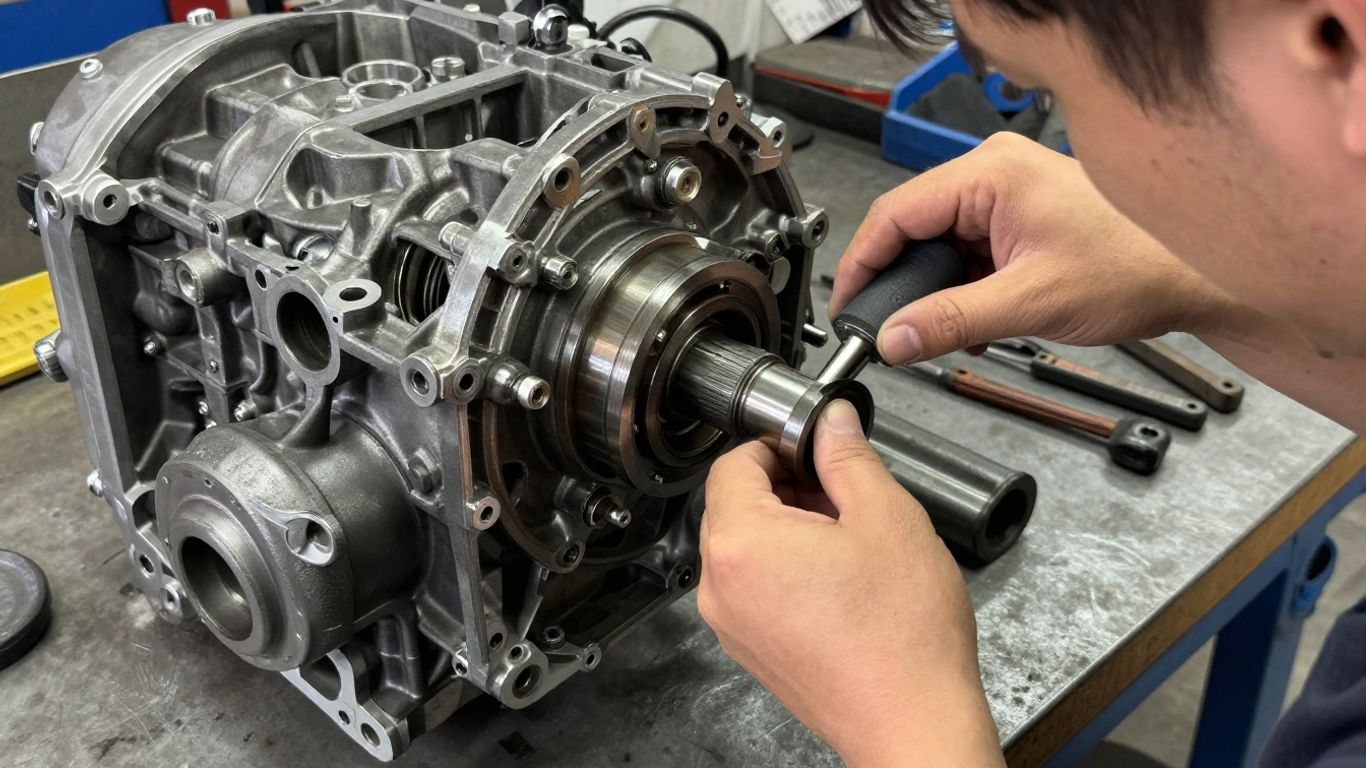
The transmission code may appear on a casing plate, stamped area, service record, or manufacturer documentation. Access can be awkward, so ask a mechanic to locate it if the gearbox is still installed. Record the engine code, transmission type, drive configuration, build date, and any visible casting numbers as well.
Those details let a supplier search more precisely than a phrase such as “Triton gearbox.” They also help expose listings that combine several model years under one description even though the parts are not identical.
Checking model year, engine size, and trim level
Confirm the year by the compliance plate or vehicle records rather than relying on registration information alone. Engine size and fuel type narrow the field, while trim level may identify differences in drivetrain equipment, electronics, or factory options. This is especially useful when a generation was sold with more than one engine or transmission.
A sensible comparison records the donor’s model year, engine, transmission type, drive system, and kilometres if known. The more closely those details align with your vehicle, the less guesswork remains for the workshop.
Using the VIN to confirm compatibility
The VIN gives a supplier and mechanic a vehicle-specific reference for checking build details. It should be supplied before purchase, not only when the part arrives. Ask the seller to confirm compatibility in writing and retain that exchange with the invoice.
VIN confirmation does not replace physical inspection or professional fitment advice. It is one layer of verification, particularly valuable when a catalogue groups several variants beneath one broad Triton application.
Understanding interchangeable gearbox components
Sometimes a complete gearbox is not the only answer. Depending on the design and damage, a workshop may assess whether a casing, selector assembly, extension housing, transfer-case component, or other external part can be reused. Internal components should never be treated as interchangeable simply because their dimensions appear close.
Have the mechanic identify the failed component before comparing partial assemblies. Mixing parts can introduce alignment, lubrication, gearing, or electronic problems that are more expensive to resolve than sourcing the correct complete unit.
3. Assess gearbox condition before buying
A used gearbox can be a sensible repair option, but its condition is often less obvious than the condition of a body panel or wheel. Ask how it was removed, what happened to the donor vehicle, and what checks were completed. Condition matters more than appearance when the part is hidden beneath the vehicle and costly to replace twice.
Signs of wear, damage, or previous overheating
Look for cracked housings, damaged mounting points, leaking seals, corrosion around connectors, and impact marks on the casing. For an automatic, dark or burnt-smelling fluid may suggest heat exposure, although the absence of fluid in a removed unit makes that clue less useful. For a manual, rough shafts, excessive play, or visible metal contamination deserve attention.
No external inspection can reveal every internal fault. A supplier should explain what was tested and what remains unknown, while a workshop can advise whether the unit should be opened or inspected before installation.
Questions to ask Brisbane wreckers and suppliers
Ask for the donor vehicle’s model, engine, transmission type, drivetrain, recorded kilometres, reason for dismantling, and storage conditions. Clarify whether the unit is tested, inspected, or untested, and ask what accessories are included. Also establish the warranty period, exclusions, return process, and responsibility for freight.
The answers should be specific rather than reassuring but vague. If a seller cannot identify the donor or explain the test status, price the part as a higher-risk purchase and compare it with a better-documented alternative.
Inspecting a removed gearbox in person
If an in-person inspection is possible, take photographs of the identification marks and compare them with the listing and invoice. Check mounting ears, threaded holes, selector mechanisms, electrical connectors, output areas, and sealing surfaces. Rotate accessible shafts only as a basic check; smooth movement does not prove that the gears and bearings are sound under load.
Bring the mechanic’s notes or measurements to the inspection. A second set of eyes is useful because a clean casing can conceal a gearbox that was removed after a drivetrain failure.
Why mileage and donor vehicle history matter
Mileage provides context but not certainty. A heavily used work ute may have experienced more towing, dust, heat, and stop-start driving than a lightly used vehicle, while a low-kilometre donor may still have suffered collision damage or poor maintenance. Donor history helps explain the number rather than turning it into a guarantee.
Ask whether the donor was running before dismantling and whether the gearbox was removed because of a transmission fault or another type of damage. That distinction can materially change the risk of the purchase.
4. Compare prices for used Triton gearboxes in Brisbane
The lowest advertised price is rarely the complete cost of a gearbox replacement. Condition, identification, testing, warranty coverage, and included components can all change the value of an apparently similar unit. Compare like with like and ask for the installed-cost assumptions before choosing a supplier.
What affects second hand gearbox pricing
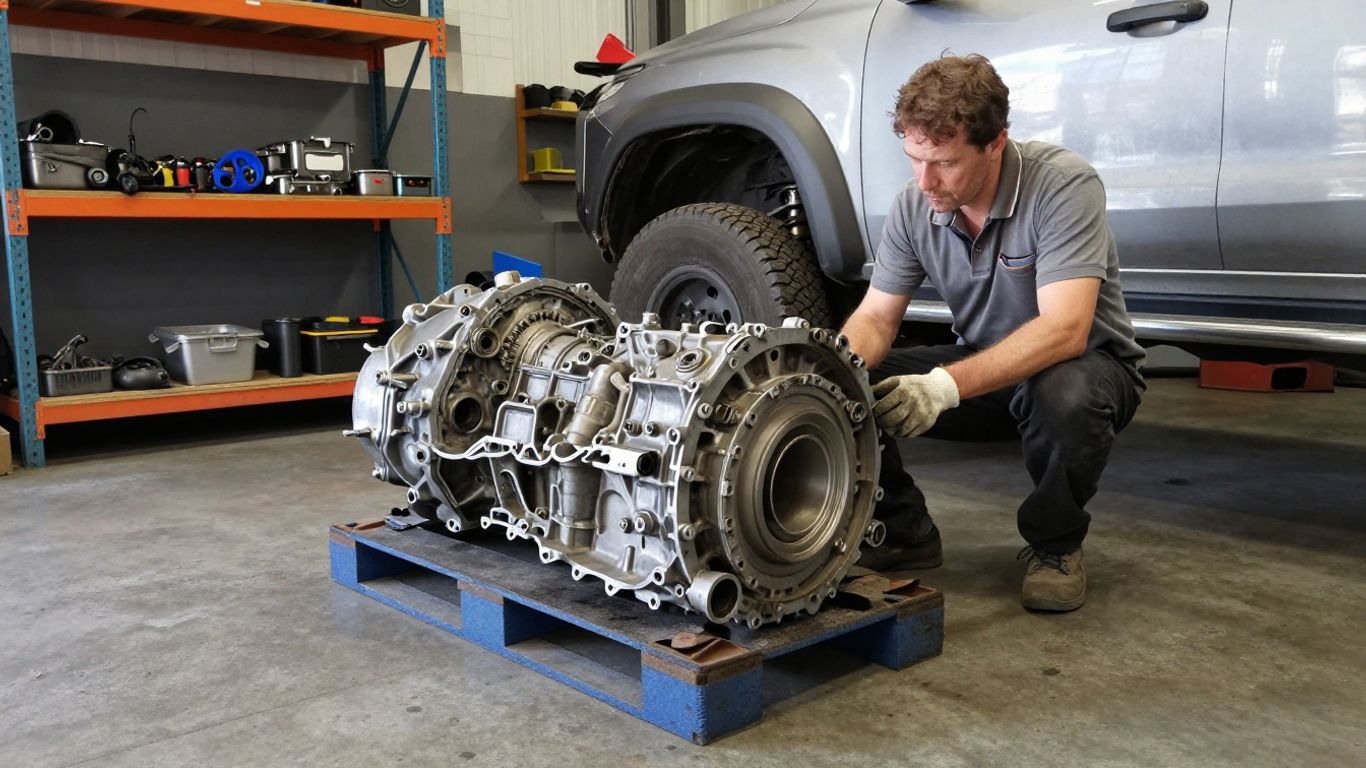
A gearbox with a known donor, matching code, documented testing, and a clear warranty will commonly be priced differently from an untested unit of uncertain origin. Automatic units may also involve additional electronics, cooler plumbing, or fluid requirements. Freight distance and packaging matter too, particularly for a heavy component.
When requesting quotes, describe the part precisely and ask what is included. A price that excludes a transfer case, converter, selector, sensors, or mounting hardware may not be directly comparable with another listing.
Comparing tested, inspected, and untested units
These labels should be treated as descriptions of process, not as interchangeable marketing terms. “Tested” should prompt a question about the actual test, such as whether the donor vehicle ran, whether shifting was assessed, or whether the unit was inspected after removal. “Inspected” may refer only to an external check, while “untested” means the buyer is accepting more uncertainty.
Use a simple comparison table to record the information that affects risk and value.
| Purchase detail | Unit A | Unit B | Unit C |
|---|---|---|---|
| Donor identified | Yes or no | Yes or no | Yes or no |
| Test status | Documented test | External inspection | Untested |
| Warranty | Written terms | Written terms | Limited or none |
| Compatibility evidence | Code and VIN check | Model description | Buyer to verify |
| Included components | Listed clearly | Partly listed | Unclear |
The table is useful only when each supplier fills it with evidence rather than guesses. A slightly higher quote may be the better choice if it includes traceable testing, a matching code, and workable warranty terms.
Accounting for freight, installation, and core charges
Add delivery, lifting or handling, workshop labour, fluids, seals, and any diagnostic work to the part price. Some suppliers may also require a refundable core charge or expect the old gearbox to be returned within a specified period. Ask who pays return freight and what condition the old unit must be in.
Request a written estimate that separates the gearbox from installation and related parts. This makes it easier to see whether a low online price remains attractive after the vehicle is off the road and the workshop begins work.
When a rebuilt gearbox may offer better value
A rebuilt unit can be worth considering when the used alternatives have uncertain history, high mileage, or limited warranty support. The term “rebuilt” still needs clarification: ask what was replaced, what was inspected, who completed the work, and what warranty applies. A rebuild is not automatically better, but its known work scope can make the risk easier to assess.
Compare the rebuilt quote with a documented used gearbox and include labour in both calculations. The right choice depends on the vehicle’s value, intended use, urgency, and the consequences of another removal and installation.
5. Choose a reputable Brisbane supplier
Brisbane buyers have several types of businesses to consider, from vehicle recyclers and wreckers to transmission specialists. The useful distinction is not the label on the business; it is the quality of identification, testing, communication, and after-sales support. A supplier who asks detailed fitment questions is generally giving the purchase the attention it requires.
Comparing wreckers, recyclers, and specialist dealers
A recycler may source a gearbox from a dismantled donor vehicle, while a specialist dealer may focus more heavily on transmission assessment or rebuilding. Either can be suitable when the unit is correctly identified and the terms are clear. Ask what role the business played in removing, testing, storing, and selling the part.
Do not assume that a specialist label guarantees a particular result, or that a recycled part is inherently poor. Judge the available evidence, the clarity of the quote, and the support offered if the unit does not fit or perform as expected.
Checking warranties and return policies
Read whether the warranty covers the part only or also contributes to removal, diagnosis, freight, and reinstallation. Check exclusions involving incorrect installation, contaminated fluid, towing, competition use, or failure to follow servicing requirements. Return windows may begin on delivery, so plan the inspection promptly.
A verbal promise is difficult to rely on when a heavy part has already been fitted. Keep the written warranty, invoice, compatibility confirmation, and any installation requirements together before authorising the work.
Verifying testing and inspection procedures
Ask for the test procedure in plain language. For a manual, that may include external inspection and donor-vehicle information; for an automatic, it may involve additional attention to fluid, electronics, and shift operation. The supplier should also state what could not be tested because the gearbox was removed.
A clear statement of what was not tested can be more useful than a broad claim that a part is perfect.
That honesty lets the mechanic plan sensible checks before fitting. It also gives you a fair basis for comparing a tested unit with a cheaper gearbox sold without meaningful evidence.
Reviewing customer feedback and business credentials
Look for feedback that discusses communication, accurate part identification, packaging, warranty handling, and resolution of problems. A general comment about friendly service tells you less than a detailed account of how a technical parts issue was handled. Check that the business provides a physical contact path, written terms, and a traceable invoice.
Use reviews as supporting information rather than proof that a particular gearbox will be fault-free. The part’s own documentation and compatibility checks remain more relevant to this purchase.
6. Plan the gearbox replacement
The gearbox is only one part of the repair. Removal and installation can expose worn seals, mounts, clutch parts, hoses, wiring, or driveline components that were difficult to inspect while everything was assembled. Discuss the likely scope with the workshop before ordering so the vehicle is not left waiting for small but essential parts.
Preparing for removal and installation costs
Ask how many labour hours are expected and whether the estimate includes diagnosis, fluid filling, bleeding, adjustment, road testing, and disposal of old materials. Four-wheel-drive vehicles may require additional driveline work, and seized fasteners or damaged mounts can extend the job. A written estimate should identify assumptions rather than pretending every removal is predictable.
Confirm whether the replacement gearbox will arrive at the workshop or whether you are responsible for transport. Proper packaging and safe handling matter because a dropped transmission can create damage before installation even begins.
Replacing related seals, fluids, and clutch components
A replacement is a practical opportunity to inspect accessible seals, gaskets, bearings, and fluid lines. On a manual vehicle, the clutch, release bearing, and flywheel should be assessed while the gearbox is out; replacing worn items then may avoid paying the same removal labour later. Automatic installations require the correct fluid and careful attention to cooler lines and cleanliness.
The workshop should recommend parts based on inspection and manufacturer requirements, not simply replace everything without explanation. Agree on which items are necessary, advisable, or optional before work starts.
Checking transfer cases, driveshafts, and mounts
A gearbox problem can be confused with noise or vibration from a transfer case, driveshaft, universal joint, differential, or engine and transmission mount. Inspect those related components while access is available. Confirm that the replacement output arrangement matches the transfer case and driveshaft lengths already fitted to the vehicle.
This check is especially valuable for a four-wheel-drive Triton, where several connected components share load and alignment. Replacing the gearbox alone will not cure a fault that originates elsewhere in the driveline.
Allowing for programming or transmission adjustments
Some automatic vehicles may require electronic checks, adaptations, or diagnostic procedures after a transmission is installed. The exact requirement depends on the vehicle, transmission, and replacement strategy, so ask the workshop before purchase rather than assuming the unit is purely mechanical. Manual gearboxes may instead need linkage, clutch, or selector adjustments.
Include post-installation scanning and road testing in the repair plan where appropriate. The technician should confirm that the gearbox communicates correctly, selects every ratio, and operates without abnormal noise or warning lights.
7. Protect your purchase after installation
A careful installation is followed by a careful handover. Before collecting the Triton, ask what was replaced, what fluid was used, what checks were completed, and whether any follow-up inspection is recommended. Early documentation makes warranty conversations much easier if a problem appears.
Running post-installation checks
Check for fluid leaks, unusual smells, warning lights, vibration, and difficult selection during the initial inspection. Confirm that reverse and every forward ratio engage correctly, and ask whether the workshop completed a road test under safe conditions. Automatic transmissions may need attention to shift quality as the vehicle reaches operating temperature.
Do not dismiss a new noise as normal without asking. A prompt inspection can distinguish a minor adjustment from a problem that should be reported under the supplier’s warranty terms.
Recognizing early signs of gearbox problems
Watch for slipping, delayed engagement, jumping out of gear, crunching, grinding, shuddering, or a change in fluid level. New oil spots beneath the vehicle also deserve attention, even if the gearbox initially drives normally. Record when the symptom occurs, whether the vehicle is hot or cold, and which gear or operating condition is involved.
Stop driving and seek advice if the vehicle becomes difficult to control or the gearbox loses drive. Continuing to operate a failing unit can increase damage and complicate a warranty assessment.
Following recommended servicing intervals
Use the correct fluid and follow the service schedule appropriate to the vehicle and transmission. Four-wheel-drive operation, towing, heavy loads, dusty roads, and frequent low-speed work may place extra demands on the drivetrain. Ask the workshop whether those conditions call for more frequent inspections or fluid servicing.
Avoid mixing fluids or relying on a generic product recommendation. The workshop should record the fluid specification and service date so future maintenance is based on evidence rather than memory.
Keeping documentation for warranty support
Keep the purchase invoice, donor and transmission details, written warranty, installation invoice, fluid records, diagnostic results, and photographs of the part before fitting. These documents show what was supplied, how it was installed, and whether the required maintenance was completed. Store digital copies as well as paper records.
If a fault appears, contact the supplier and workshop promptly, describe the symptoms accurately, and follow the warranty process before authorising major extra work. Clear records protect your position without turning a technical problem into an argument about recollection.
Conclusion
A used Triton gearbox can be a practical repair when compatibility is verified, condition is honestly described, and the full installation cost is understood. Take the transmission code and VIN seriously, compare evidence rather than headline prices, and involve a qualified workshop before purchase and after fitting. That method gives Brisbane buyers a better chance of finding the right part and avoiding a repeat removal job.